



What's Happening?
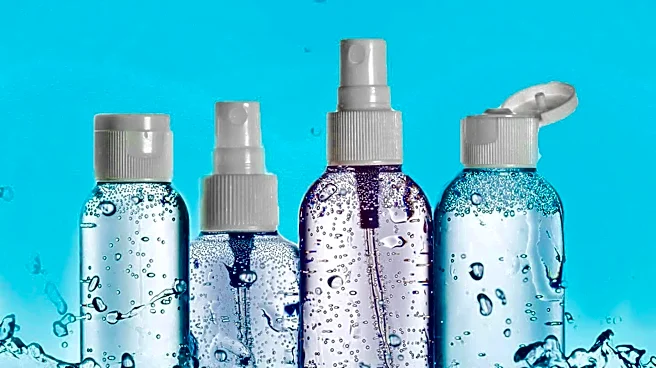
Korean jelly mists are emerging as a significant trend in the U.S. beauty market, with products like Biodance Collagen Peptides Jelly Serum Mist and The Face Shop Rice Water Ready Glowy Essence Jelly Mist leading the charge. These mists are designed to
provide intense hydration, minimize pores, and impart a 'glass skin' glow, a highly sought-after aesthetic characterized by smooth, luminous, and seemingly translucent skin. The Biodance mist, for instance, is marketed as a 'sprayable hydrogel' that delivers collagen water and peptides for deep moisture and a bouncy skin texture. Similarly, The Face Shop's mist aims to provide an intense glow and is packed with peptides, PHA, and jojoba oil to firm, exfoliate, and moisturize. The trend is also gaining celebrity endorsement, with Kendall Jenner reportedly approving of Anua's PDRN Collagen Glow Facial Serum Spray for post-makeup refreshment. These products are being used both on bare skin to boost moisture and glow, and over makeup to set and refresh, highlighting their versatility and appeal to a broad consumer base seeking enhanced skin radiance and hydration.
Why It's Important?
The rising popularity of Korean jelly mists signifies a continued and deepening influence of K-beauty innovations on the U.S. skincare industry. This trend is important because it drives consumer demand for specialized, multi-functional products that promise both immediate aesthetic benefits, like the 'glass skin' effect, and long-term skin health improvements, such as hydration and pore minimization. For U.S. beauty retailers and brands, this means an increased need to either stock these popular K-beauty imports or develop their own competitive products. The emphasis on ingredients like collagen, peptides, and natural extracts also reflects a broader consumer shift towards ingredient-conscious and efficacy-driven skincare. Brands that can effectively market products offering similar benefits, or those that can successfully import and distribute these Korean innovations, stand to gain significant market share. Conversely, traditional U.S. skincare brands that fail to adapt to these evolving consumer preferences for advanced, hydrating, and glow-enhancing formulations may find themselves at a disadvantage in a competitive market.
What's Next?
The U.S. beauty market can expect to see an influx of new jelly mist products, both from established K-beauty brands expanding their presence and from U.S. brands attempting to replicate the success of the 'glass skin' trend. Retailers will likely increase their shelf space and online offerings for these types of products, potentially leading to more accessible price points and wider availability. There may also be a focus on developing mists with additional benefits, such as anti-aging properties or targeted treatments for specific skin concerns, to further differentiate products in a growing market. Educational campaigns from brands and beauty influencers will likely continue to promote the benefits and proper application of jelly mists, further solidifying their place in daily skincare routines. The success of these mists could also pave the way for other innovative K-beauty formats and ingredients to gain traction in the U.S., continuing the trend of global beauty influence on American consumer habits.
Beyond the Headlines
Beyond the immediate sales and product development, the 'glass skin' phenomenon, spearheaded by products like jelly mists, reflects a deeper cultural shift in beauty ideals within the U.S. It moves beyond traditional notions of matte or heavily made-up skin towards an appreciation for natural radiance, health, and hydration. This trend encourages a more holistic approach to skincare, where the focus is on achieving optimal skin health rather than merely concealing imperfections. Ethically, the emphasis on 'natural' and 'glowy' skin can be seen as both empowering, by promoting self-acceptance, and potentially problematic, by setting new, sometimes unattainable, beauty standards. The rapid adoption of K-beauty trends also highlights the power of social media and influencer marketing in shaping consumer preferences and accelerating product lifecycles in the beauty industry, underscoring the need for brands to remain agile and responsive to global beauty dialogues.