








What's Happening?
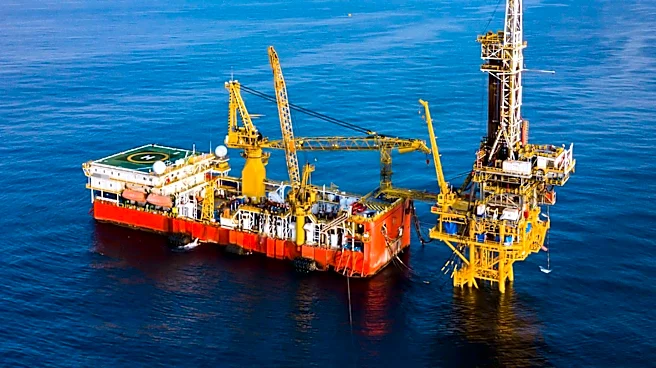
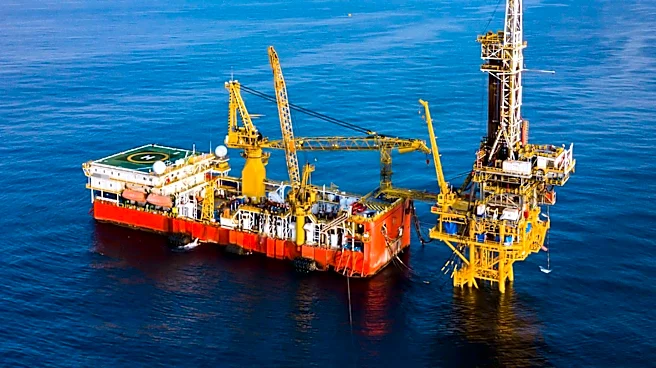
The U.S. oil and gas company Murphy Offshore Oil, in partnership with Israeli company Ratio Energies, has been awarded six natural gas exploration licenses in Block G off Israel's coast. Each company will hold a 50% stake, with Murphy operating the exploration program.
This development follows the withdrawal of Italian energy giant Eni from the project, which had initially won the tender. Eni's departure was reportedly due to political pressure and protests from pro-Palestinian organizations, as portions of Block G are located in disputed maritime areas. The Israeli Energy Ministry views Murphy Oil's entry as a success in its strategy to attract international companies to expand gas production and increase energy reserves for both domestic consumption and export. Exploratory drilling is expected to commence within three years, with initial exploration costs estimated at $80 million. The licenses are initially valid for three years, with potential extensions up to seven years, and could convert to a long-term production lease if a commercial discovery is made.
Why It's Important?
The involvement of a major U.S. energy company like Murphy Oil in Israel's offshore gas exploration is significant for several reasons. It underscores the strategic importance of natural gas for Israel's economic and diplomatic standing, particularly in the Middle East. The Israeli Energy Ministry explicitly stated its policy is to expand natural gas exploration and attract international energy giants to boost production for both domestic use and exports. For the U.S., this move by Murphy Oil represents an expansion of its energy sector's global footprint and could contribute to diversifying global energy supplies. The previous withdrawal of Eni due to political pressure highlights the geopolitical sensitivities surrounding energy projects in the region, and Murphy's entry suggests a willingness to navigate these complexities. The potential for significant gas discoveries in Block G, estimated at 100-150 billion cubic meters, could further solidify Israel's position as a regional energy player and generate substantial state revenues, projected to reach hundreds of billions of shekels over the next three decades.
What's Next?
Seismic exploration in Block G is anticipated to begin shortly, with exploratory drilling mandated within approximately three years. The Israeli Energy Ministry plans to open a fifth competitive licensing round for natural gas exploration towards the end of the year, with licenses expected to be awarded in early 2027, indicating a continued push for increased exploration. Officials are hopeful that Murphy Oil will not face similar political pressures that led to Eni's withdrawal. The success of this project could encourage further international investment in Israel's energy sector. Additionally, the expansion of production capacity at existing gas reservoirs like Tamar and Leviathan, completed earlier in 2026, and a large gas export agreement with Egypt's Blue Ocean Energy, signal Israel's ongoing efforts to maximize its natural gas resources and export capabilities. The outcome of Murphy Oil's exploration efforts will be closely watched as it could influence future investment decisions and regional energy dynamics.
Beyond the Headlines
Murphy Oil's entry into Israel's offshore gas sector carries deeper implications beyond immediate energy production. It highlights the intricate interplay between energy security, international business, and geopolitical stability in a volatile region. The previous withdrawal of Eni due to anti-Israel pressure underscores the challenges companies face when operating in politically charged environments, raising questions about corporate social responsibility and the influence of public sentiment on business decisions. Murphy Oil's decision to proceed suggests a strategic calculation of risk versus reward, potentially viewing the long-term energy prospects as outweighing the political complexities. This move could also be seen as a vote of confidence from a U.S. company in Israel's energy potential, potentially encouraging other international players. Furthermore, the emphasis on expanding natural gas exploration and exports aligns with broader global energy trends where countries are seeking to diversify their energy sources and enhance energy independence, even as the world transitions towards renewable energy. The ethical and legal dimensions of operating in disputed maritime areas will likely remain a point of contention for stakeholders.