




What's Happening?
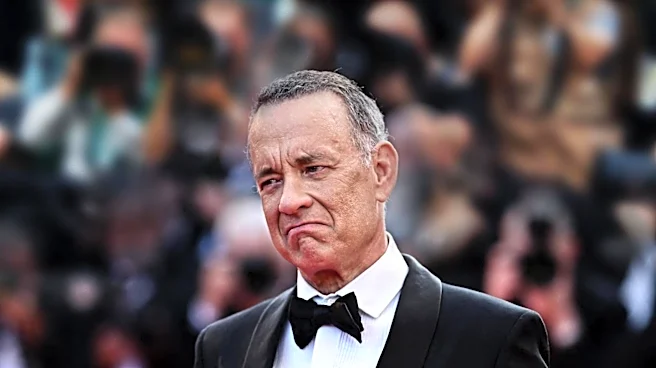
Henry Winkler has publicly addressed the long-standing tension between himself and Tom Hanks, stemming from incidents during their early careers. Winkler, known for his role as Fonzie in 'Happy Days,' recounted being fired as the director of the 1989
film 'Turner & Hooch,' which starred Hanks. He admitted to feeling unsuited for the directing role but took it on, leading to a situation where his directing style reportedly 'pissed off' Hanks. This resulted in Winkler's dismissal from the project after only 13 days of filming, an event he described as devastating. Furthermore, Winkler mentioned a more recent instance where a 'Happy Days' retrospective sought permission to use a 60-second clip of Hanks' guest appearance on the show but was denied. Winkler stated he is 'still working on his perspective' regarding their relationship, acknowledging that Hanks' wife, Rita Wilson, also had a guest role on 'Happy Days.' Despite the past issues, Winkler expressed optimism that their relationship could eventually 'repair itself.' He also revealed that he still possesses a model plane Hanks built for him during their time together on the 'Turner & Hooch' set.
Why It's Important?
This revelation from Henry Winkler sheds light on the often-unseen complexities and personal dynamics within the entertainment industry, particularly concerning long-term professional relationships. The tension between two prominent figures like Winkler and Hanks, both highly respected in Hollywood, underscores how early career experiences can leave lasting impacts. For aspiring filmmakers and actors, it highlights the pressures and potential conflicts that can arise on set, especially when creative visions clash or when individuals are placed in roles they feel ill-equipped for. The denial of permission to use archival footage also points to the control celebrities and their representatives maintain over their public image and past work, even decades later. This situation could influence how future collaborations are approached, emphasizing the importance of clear communication and mutual respect to avoid such prolonged professional estrangement. It also offers a rare glimpse into the personal side of celebrity interactions, moving beyond public personas to reveal underlying human emotions and unresolved issues.
What's Next?
While Winkler expressed hope for a future repair of their relationship, the immediate next steps are unclear. The ball appears to be in Hanks' court, as Winkler has publicly shared his feelings and perspective. There might be increased media scrutiny and public discussion surrounding this long-standing tension, potentially prompting a response or acknowledgment from Hanks or his representatives. The entertainment industry may also reflect on how such historical conflicts are managed and resolved, especially given the public nature of their careers. For fans of both actors, this disclosure could lead to a re-evaluation of their past works and interactions. It remains to be seen if this public statement will open a dialogue between Winkler and Hanks, or if the 'perspective' Winkler is still working on will evolve further with time. The situation could serve as a case study for industry professionals on navigating difficult interpersonal dynamics in high-pressure creative environments.
Beyond the Headlines
The ongoing tension between Henry Winkler and Tom Hanks, as revealed by Winkler, delves into deeper themes of professional identity, ego, and the subjective nature of memory within the entertainment world. Winkler's admission of feeling unsuited for the directing role on 'Turner & Hooch' and his subsequent firing highlights the vulnerability even established actors face when stepping into new professional territories. It also touches upon the power dynamics inherent in film production, where a lead actor's influence can significantly impact a director's tenure. The refusal to grant permission for archival footage use, even for a brief segment, suggests a desire to control narratives and potentially avoid revisiting past conflicts. This situation underscores how personal experiences, even those from decades ago, can shape an individual's professional and personal outlook, influencing their interactions and public image. It also raises questions about the burden of unresolved issues and the psychological impact of professional setbacks on individuals in the public eye, demonstrating that even successful careers can carry hidden emotional baggage.