






What's Happening?
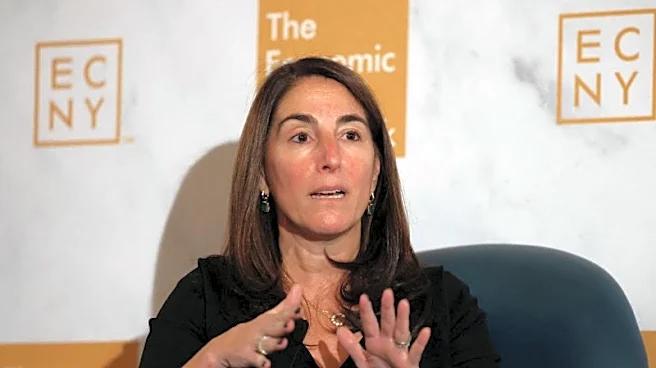
The recent sell-off in U.S. Treasuries has highlighted the need for the Federal Reserve to reinforce its credibility in managing inflation, according to St. Louis Fed President Alberto Musalem. Musalem, who participates in Federal Open Market Committee
discussions but does not vote this year, suggested that earlier, incremental interest-rate hikes would be less disruptive than larger, abrupt actions later. The Fed's decision to leave interest rates unchanged, combined with comments from Fed Chair Kevin Warsh about potentially reconsidering the inflation framework, contributed to a decline in Treasury prices. The yield on the 30-year U.S. Treasury rose above 5.2%, its highest in 19 years, indicating increased borrowing costs across the economy.
Why It's Important?
The rise in long-term yields can significantly impact the U.S. economy by increasing borrowing costs for mortgages, corporate debt, and government financing. This can also affect equity valuations by reducing the appeal of future corporate earnings. The dissent from three FOMC members, who favored a rate increase, underscores the internal pressure on the Fed to act against persistent inflation, which has remained above the 2% target for over five years. The market's anticipation of a rate hike in September, with a 67% probability, reflects the uncertainty and potential for tighter monetary policy, which could influence various economic sectors, including banking, technology, and consumer stocks.
What's Next?
The Fed's future actions will be closely watched, with traders placing a high probability on a rate hike in September. Musalem's comments suggest broader support for tighter policy, adding to the uncertainty over the timing and pace of future rate increases. The Fed's approach to managing inflation and interest rates will be critical in shaping economic conditions, influencing everything from consumer spending to investment decisions. The potential for higher rates could support bank lending margins but may pressure rate-sensitive sectors, highlighting the delicate balance the Fed must maintain.