






What's Happening?
The U.S. modular furniture market is experiencing significant growth, with projections indicating it will reach $24.3 billion by 2025. This expansion is largely driven by the increasing trend of smaller home sizes and rising urban living costs across
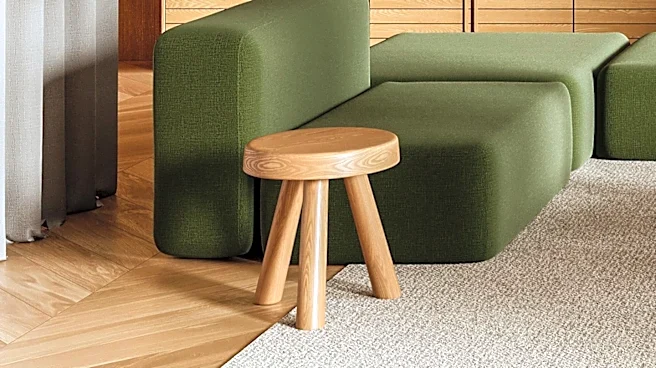
the nation. Modular furniture, characterized by its separate, standardized units that can be combined, rearranged, or expanded, offers flexibility and space-saving solutions. This design approach allows consumers to assemble systems from individual components rather than purchasing fixed pieces, making it adaptable to changing living situations. The market's momentum is further fueled by younger buyers and small families who prioritize practicality and style, as well as demand from offices and co-working spaces seeking reconfigurable layouts. Key types of modular furniture include sofas, shelving and storage systems, bed systems like wall beds with built-in features, and office furniture designed for adaptability.
Why It's Important?
The surge in the modular furniture market reflects a broader societal shift in the U.S. towards more efficient and adaptable living and working environments. As urban populations grow and housing costs escalate, consumers are increasingly seeking innovative solutions to maximize limited space. This trend impacts the furniture industry by driving demand for versatile, multi-functional pieces that can evolve with changing needs, rather than traditional, fixed furniture. For businesses, particularly in urban centers, modular office furniture offers the flexibility to reconfigure workspaces as teams and layouts change, optimizing real estate usage. The growth also signifies a move towards more sustainable consumption patterns, as modular pieces can be expanded or repaired rather than entirely replaced, potentially reducing waste. This market shift presents opportunities for manufacturers and retailers to innovate in design, materials, and customization to meet evolving consumer preferences.
What's Next?
The modular furniture market is expected to continue its steady growth through 2035, indicating a sustained demand for flexible and space-saving solutions. Manufacturers are likely to focus on further innovation in design, materials, and customization options to cater to diverse consumer needs and preferences. This could include developing more advanced modular systems that integrate smart home technology or offer enhanced ergonomic features. Retailers will likely expand their offerings of modular furniture, making it more accessible to a wider audience, both online and in physical stores. Additionally, the emphasis on sustainability and durability in furniture design is expected to increase, influencing product development and marketing strategies. Consumers can anticipate a broader range of modular options that combine aesthetics with practical functionality, further blurring the lines between residential and commercial furniture solutions.
Beyond the Headlines
The rise of modular furniture extends beyond mere practicality; it signifies a cultural adaptation to modern living challenges. The emphasis on flexibility and customization in furniture design mirrors a broader societal value placed on adaptability and personalization in various aspects of life. This trend challenges traditional notions of permanence and ownership, favoring transient and reconfigurable solutions. Ethically, the focus on repairability and expandability in modular design could contribute to a more circular economy, reducing the environmental impact of furniture consumption. Legally, this shift might prompt new considerations in housing regulations and urban planning, as smaller, more flexible living spaces become the norm. Culturally, modular furniture reflects a growing appreciation for minimalist aesthetics and efficient living, influencing interior design trends and consumer expectations for functionality and versatility in their homes and workplaces.