
What's Happening?
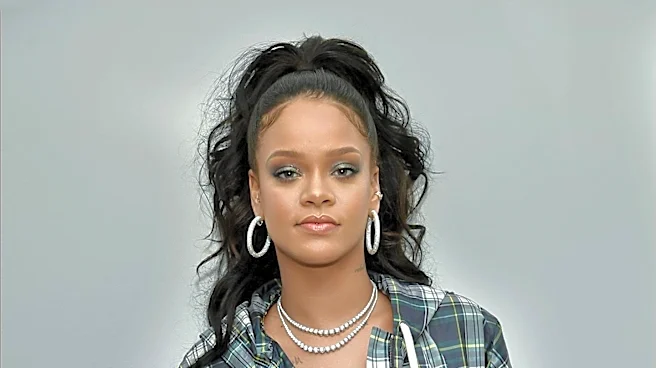
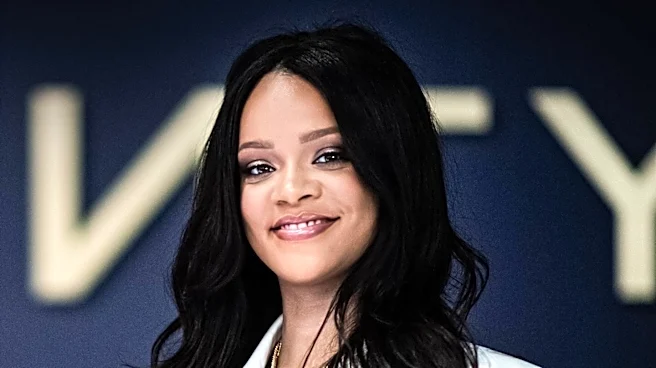
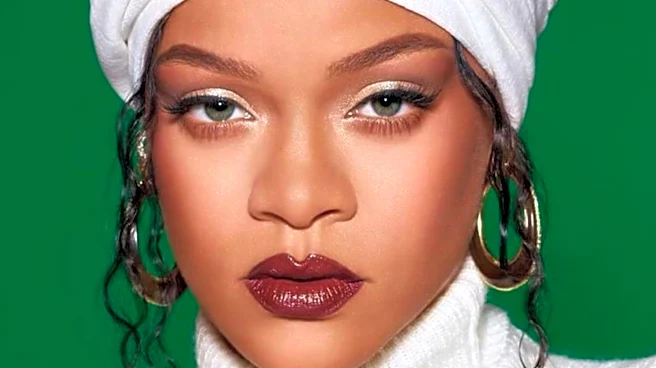
Fenty Beauty, the cosmetics brand founded by Rihanna, was valued at $2.8 billion as of August 2021, with Rihanna owning a 50% stake. The brand was launched through a collaboration with Kendo, LVMH's beauty
incubator, and its distribution was primarily handled by Sephora, an LVMH-owned retailer, and its own website. Fenty Beauty gained significant recognition for its inclusive shade range, particularly its Pro Filt'r Soft Matte Longwear Foundation, which initially launched with 40 shades and later expanded to 50. This focus on inclusivity was a core part of the brand's strategy, aiming to provide products for all skin tones and types. The brand's success has been acknowledged by various publications, including Time, which named it one of the 25 best inventions of 2017 and among its most genius companies of 2018. Women's Wear Daily also recognized Fenty Beauty as the 2017 launch of the year in the prestige sector and Digital Innovator of the Year for 2018.
Why It's Important?
Fenty Beauty's success highlights the significant market demand for inclusive beauty products and the impact of celebrity-backed brands when combined with strong corporate backing and strategic distribution. The brand's emphasis on a wide shade range set a new benchmark in the beauty industry, influencing consumer expectations and prompting other brands to expand their offerings. This shift, often referred to as the 'Fenty Effect,' demonstrated that inclusivity could be a powerful driver of commercial success, challenging the traditional beauty industry's often limited shade selections. The valuation of $2.8 billion underscores the financial power of a brand that effectively addresses underserved consumer needs and leverages a founder's global influence. This success also showcases the effectiveness of integrating brand values directly into product architecture, making inclusivity a tangible and verifiable feature rather than just a marketing message.
What's Next?
Fenty Beauty continues to expand its product lines and global reach. The brand has consistently introduced new products, including concealers and setting powders, maintaining its commitment to broad shade ranges. Future developments may include further geographical expansion, as evidenced by its launch in various African countries and China. The brand's continued innovation in product development and its strategic collaborations, such as with CASETiFY for iPhone cases, indicate a sustained effort to diversify its offerings and engage with its consumer base across different lifestyle touchpoints. The ongoing influence of the 'Fenty Effect' suggests that other beauty brands will likely continue to adapt their strategies to meet evolving consumer demands for inclusivity, potentially leading to further innovation and competition in the beauty market.
Beyond the Headlines
Fenty Beauty's impact extends beyond its financial success, fostering a broader conversation about representation and diversity in the beauty industry. The brand's launch challenged existing norms and highlighted the historical exclusion of many consumers, particularly those with deeper skin tones, from mainstream beauty offerings. This has led to a more conscious consumer base that expects and demands inclusivity from brands. Ethically, Fenty Beauty's approach underscores the importance of authentic representation and the commercial benefits of designing products with a diverse audience in mind from the outset. Culturally, it has contributed to a shift in beauty standards, promoting a more inclusive vision of beauty that celebrates all skin tones. This long-term shift could lead to a more equitable and representative beauty landscape, where product development and marketing strategies are inherently designed to cater to a global and diverse consumer base.