





What's Happening?
Green Technology Metals (ASX:GT1) has achieved a significant milestone for its Seymour Lithium Project in northwestern Ontario, Canada, by receiving formal notification of the completion of its environmental assessment (EA) process. The Ontario Ministry
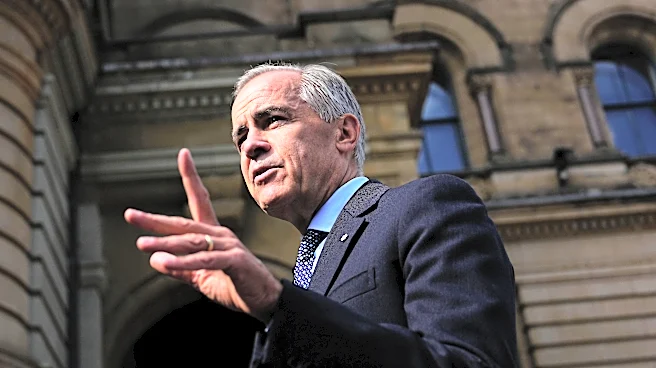
of Natural Resources (MNR) issued a statement of completion for the permit to remove forest resources, which now allows government agencies to issue development permits across the project area. The company submitted its project description in November 2022 and received a Category B classification in September 2023, indicating potential low to medium environmental impacts. Managing Director Cameron Henry emphasized the project's low-risk profile, noting that its processing model uses gravity-based separation without chemicals to produce concentrate, making it environmentally friendly. The EA process involved public and Indigenous group reviews, and GT1 is now preparing remaining permit applications, including a mine closure plan (MCP) to be filed in Q4 2026.
Why It's Important?
This environmental approval for Green Technology Metals' Seymour Lithium Project is crucial for the U.S. and North American critical minerals supply chain. As the U.S. and Canada push for greater energy independence and the transition to electric vehicles, securing reliable sources of lithium is paramount. The Seymour project, located in Ontario, will contribute to a localized supply of hard-rock spodumene, reducing reliance on overseas sources and mitigating geopolitical risks. The project's environmentally friendly processing method, which avoids chemicals, aligns with growing demands for sustainable mining practices and could set a precedent for future mining operations in the region. For U.S. industries, particularly automotive and battery manufacturers, a stable and ethically sourced lithium supply from a neighboring country offers significant advantages in terms of logistics, cost, and regulatory compliance. This development supports the broader North American strategy to build a robust domestic supply chain for critical minerals, fostering economic growth and job creation in the sector.
What's Next?
With the environmental assessment complete, Green Technology Metals will proceed with preparing and filing its remaining permit applications, including the mine closure plan (MCP) in Q4 2026. Once the MCP is filed and the EA is fully approved, the company can obtain operational permits such as those for timber removal, air and sewage environmental compliance, water infrastructure, and water taking. GT1's recent acceptance into the U.S. Defense Industrial Base Consortium (DIBC) further positions it within North American defense and critical minerals supply chains, suggesting potential future collaborations and strategic importance. The company will continue consultations with Indigenous partners throughout this process. The successful permitting and eventual operation of the Seymour project will contribute to the growing North American lithium production capacity, supporting the region's electric vehicle and renewable energy initiatives. Future developments will likely include securing financing, commencing construction, and establishing off-take agreements with battery manufacturers.
Beyond the Headlines
The environmental approval of the Seymour Lithium Project underscores the complex interplay between economic development, environmental stewardship, and Indigenous rights in critical mineral extraction. The emphasis on a chemical-free, gravity-based separation process highlights a growing demand for sustainable mining practices, which could become a competitive advantage in the global market. This project also reflects a broader geopolitical strategy by the U.S. and Canada to de-risk supply chains for essential materials, moving towards regional self-sufficiency. The involvement of Indigenous groups in the review process points to evolving standards for resource development, where community engagement and benefit-sharing are increasingly critical for project viability. Long-term, the success of projects like Seymour could foster a new model for responsible mining, balancing industrial needs with ecological preservation and social equity. This could lead to a re-evaluation of mining regulations and best practices across North America, setting a precedent for future resource development.