




What's Happening?
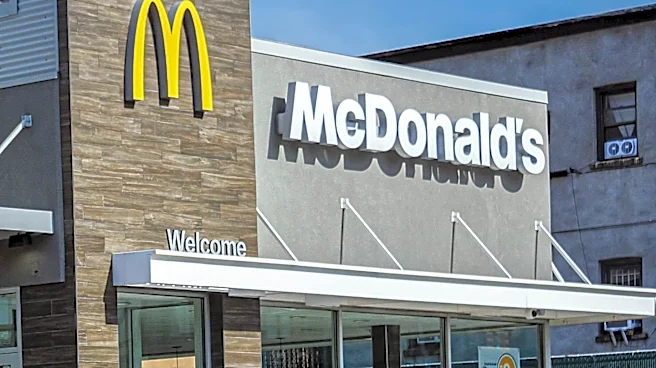
McDonald's is encountering resistance from its U.S. franchisees regarding a new initiative, dubbed 'Next,' which mandates approximately $800,000 in upgrades per restaurant. Franchisees, who operate over 95% of McDonald's U.S. locations, are hesitant to
commit to these significant expenditures without clear evidence of financial returns from test markets. The 'Next' plan aims to enhance McDonald's appeal by offering both quick value and higher-quality food options. Key components of this strategy include the testing of hand-breaded chicken at around 200 restaurants in the U.S. and Ireland, and the implementation of AI ordering systems in drive-thrus. This comes as McDonald's U.S. same-store sales experienced a 0.2% dip in the third quarter, marking the first decline since early 2025. CEO Chris Kempczinski asserts confidence in the strategy, citing positive guest reception in test markets and strong financial results from previous remodels. McDonald's has pledged $8.5 billion in franchisee support through 2036.
Why It's Important?
This dispute highlights a significant tension between McDonald's corporate strategy and the financial concerns of its franchisees, who are crucial to the brand's operational success. The substantial $800,000 per-store upgrade cost represents a considerable investment for individual operators, particularly in a challenging economic climate where U.S. sales have recently declined. Franchisees are seeking concrete data to justify these costs, emphasizing the need for a clear return on investment at the local level. The success or failure of the 'Next' initiative, and how McDonald's addresses franchisee concerns, could set a precedent for future corporate-franchisee relations within the fast-food industry. If the upgrades prove successful, they could boost McDonald's competitiveness against rivals like Chick-fil-A and Raising Cane's, potentially increasing market share and revenue. Conversely, widespread franchisee dissatisfaction or financial strain could lead to operational challenges and impact the brand's overall performance.
What's Next?
McDonald's has established task forces comprising company leaders and franchisees to review the economic implications of the 'Next' plan. The outcome of these reviews will be critical in determining the path forward for the upgrade initiative. Franchisees will likely continue to demand market-specific data demonstrating the financial viability of the hand-breaded chicken and AI drive-thru systems before fully committing to the investments. The company's ability to effectively communicate the proven benefits and provide adequate support will be key to gaining franchisee buy-in. The ongoing testing of new menu items and AI technology will provide further data points that could either alleviate or exacerbate franchisee concerns. The broader fast-food industry will be watching closely to see how McDonald's navigates this challenge, as it could influence similar upgrade strategies across other franchise models.
Beyond the Headlines
The pushback from McDonald's franchisees underscores a broader trend in the franchise business model, where corporate mandates for modernization and innovation often clash with the financial realities and risk aversion of independent operators. This situation raises questions about the balance of power and shared responsibility within franchise systems. While corporate aims to maintain brand consistency and competitiveness, franchisees bear the direct financial burden and localized market risks. The introduction of AI ordering and new menu items like hand-breaded chicken reflects a strategic pivot towards technology and premium offerings to attract a wider customer base and compete with emerging fast-casual concepts. However, the success of such innovations hinges on their practical implementation and profitability at the individual store level, highlighting the complex interplay between global corporate vision and local operational execution.