




What's Happening?
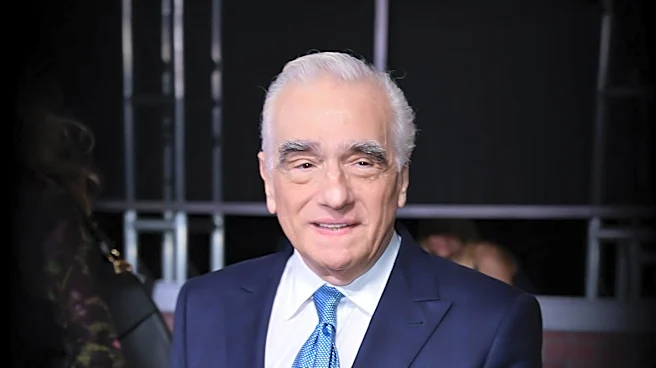
Filmmaker Martin Scorsese, a dominant figure in the modern movie industry with a career spanning six decades, has revealed that his 1973 crime drama, 'Mean Streets,' remains his personal favorite among his works. Despite its critical acclaim and its role
in defining themes prevalent in his later films—such as the Italian American experience, Catholicism, New York's urban underbelly, and the mafia—Scorsese admitted in a 1990 interview with Rolling Stone that he would struggle to watch it again. He co-wrote the script with his lifelong friend, Mardik Martin, and the film stars Harvey Keitel and Robert De Niro. 'Mean Streets' was Scorsese's first film for Warner Bros. with a significant budget and garnered substantial critical praise upon its release, with De Niro earning two Best Supporting Actor awards. The film is currently available for streaming on Tubi and PLEX.
Why It's Important?
Scorsese's candid admission about 'Mean Streets' being too personal to re-watch offers a rare insight into the emotional investment and autobiographical elements embedded in a director's work. This perspective is significant for film studies and appreciation, as it highlights how personal experiences can profoundly shape artistic output, even for highly successful and prolific filmmakers. For aspiring filmmakers and screenwriters, it underscores the value of drawing from one's own life and environment to create authentic narratives. The film's exploration of the Italian American experience and urban life in New York has had a lasting impact on cinematic portrayals of these subjects, influencing subsequent generations of storytellers and contributing to the rich tapestry of American cinema. Its continued availability on streaming platforms also ensures its accessibility for new audiences and scholars.
What's Next?
While Scorsese's statement about 'Mean Streets' is a reflection on past work, it reinforces the enduring legacy of his early films and their foundational role in his career. The film's continued presence on streaming services suggests ongoing accessibility for audiences interested in exploring the origins of Scorsese's distinctive style and thematic concerns. This revelation might prompt renewed critical analysis of 'Mean Streets,' encouraging film enthusiasts and academics to re-examine the film through the lens of Scorsese's personal connection. It could also inspire discussions about the relationship between an artist's personal life and their creative output, potentially influencing how future films are interpreted and appreciated.
Beyond the Headlines
The deep personal connection Scorsese feels to 'Mean Streets' transcends typical artistic attachment, touching upon the psychological and emotional toll that creating deeply personal art can take. His reluctance to re-watch it suggests that the film serves as a raw, unvarnished mirror to his past, reflecting experiences and emotions that are perhaps too intense or vulnerable to revisit casually. This aspect highlights the often-overlooked human element behind artistic masterpieces, where the creator's identity is inextricably woven into the fabric of their work. It also raises questions about the boundaries between an artist's life and their art, and how much of themselves they are willing to expose and then revisit. The film's enduring critical success, despite its personal nature, underscores the universal appeal of authentic storytelling, even when it originates from a deeply specific and individual experience.