





What's Happening?
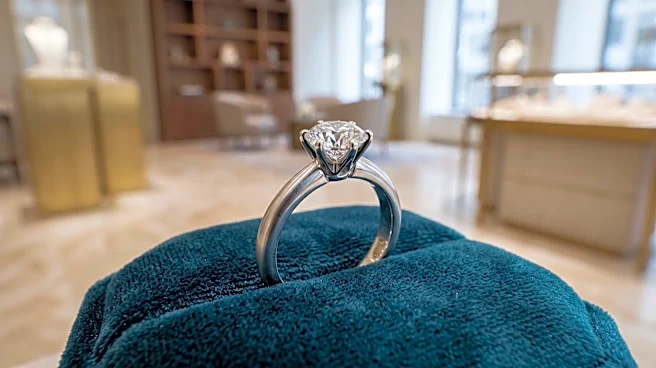
Tiffany & Co., a luxury jewelry company founded in 1837 and headquartered in New York, New York, has been identified as one of the largest retail luxury goods and jewelry companies in the United States. As of 2026, the company employs 14,000 individuals.
Operating under the LVMH Group, Tiffany & Co. offers a diverse range of products, including fine jewelry, watches, accessories, home decor, and gifts. The company is recognized for its innovative design, fine craftsmanship, and global cultural influence. Its extensive operations span worldwide, solidifying its position in the luxury retail sector. A recent job listing for a Jeweler position in Queens, New York, indicates a hiring range of $23 to $31 per hour, reflecting ongoing operational needs.
Why It's Important?
Tiffany & Co.'s prominent position in the U.S. luxury retail market signifies the continued strength and demand within the high-end jewelry and accessories sector. Its substantial workforce of 14,000 employees highlights its significant contribution to the national economy through job creation and sustained economic activity. The company's global reach and long-standing reputation for quality and design set a benchmark for other players in the luxury goods industry. The listed hourly wage for a Jeweler position in New York provides insight into compensation trends for skilled trades within the luxury manufacturing segment, potentially influencing labor market dynamics and attracting talent to specialized craftsmanship roles. The company's status as part of the LVMH Group also underscores the influence of international conglomerates on the U.S. luxury market.
What's Next?
As Tiffany & Co. maintains its leadership in the luxury retail sector, future developments may include continued expansion of its product lines and global footprint. The company's ongoing hiring, as evidenced by the Jeweler position, suggests a sustained commitment to maintaining its high standards of craftsmanship and potentially increasing production capacity. The broader luxury goods market will likely continue to see innovation in design and materials, with companies like Tiffany & Co. at the forefront. Industry trends may also focus on ethical sourcing and sustainability, areas where established luxury brands are increasingly expected to demonstrate leadership. The competitive landscape will likely drive further differentiation in product offerings and customer experience.
Beyond the Headlines
Tiffany & Co.'s enduring legacy, dating back to 1837, reflects more than just commercial success; it embodies a significant cultural impact on American luxury and design. The brand's iconic status has shaped perceptions of elegance and aspiration, influencing consumer tastes and trends for generations. Its commitment to fine craftsmanship also speaks to the preservation of traditional artisan skills in an increasingly automated world. The company's role within the LVMH Group illustrates the global consolidation of luxury brands, raising questions about brand identity and market control. Furthermore, the emphasis on luxury goods often intersects with discussions about wealth distribution and consumerism, highlighting broader societal values and economic disparities.