




What's Happening?
Goldman Sachs is developing a new 800,000 square foot campus in downtown Dallas, with an anticipated debut in January 2028. This move aims to consolidate its Dallas workforce, currently spread across two buildings, into a single, state-of-the-art facility
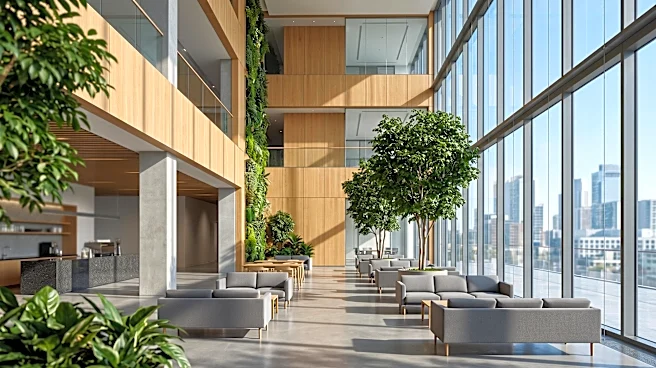
located next to the Perot Museum. The campus will feature an auditorium, wellness center, fitness facility, backup daycare, coffee bar, and multiple cafeteria options. Outdoor spaces will include trees, shade, and a 1.5-acre park. Goldman Sachs CEO David Solomon noted that Dallas is already the firm's second-largest U.S. location after its New York City headquarters, where the headcount has remained stable for two decades. Solomon attributed the growth in markets like Dallas and Salt Lake City to factors such as talent availability, policy, taxes, and the overall environment. Chief Administrative Officer Ericka Leslie echoed the importance of attracting young talent and highlighted Dallas's vibrant urban environment and growing population.
Why It's Important?
This significant investment by Goldman Sachs in Dallas underscores a broader trend of major financial institutions expanding their operations beyond traditional financial hubs like New York City. The decision to build a large, amenity-rich campus reflects a strategic move to attract and retain talent in a competitive labor market, particularly in cities offering a favorable business environment, lower costs, and a high quality of life. This shift has substantial implications for urban development and economic growth in cities like Dallas, as it brings high-paying jobs, stimulates local economies, and contributes to the densification of urban centers. For Goldman Sachs, consolidating its Dallas operations is expected to enhance collaboration among different business units and improve overall productivity. The emphasis on amenities like wellness centers and daycare facilities also highlights evolving corporate strategies to support employee well-being and work-life balance, which are increasingly important for attracting modern workforces. This move could also influence other companies to consider similar relocations or expansions, further decentralizing the U.S. corporate landscape.
What's Next?
Goldman Sachs is preparing to commence the interior buildout of its Dallas campus, with a projected move-in date of January 2028. The company will need to navigate the tight labor market in Dallas's construction sector to keep the project on schedule. The consolidation of staff into a single location is expected to foster greater collaboration and efficiency across different business units. The success of this campus could serve as a model for future expansions or relocations by Goldman Sachs and other financial firms. The firm's involvement in launching the Texas Stock Exchange in Dallas further solidifies its commitment to the region and could attract more financial activity to the city. Local officials and businesses will likely monitor the impact of Goldman Sachs's presence on Dallas's economic development, talent pool, and urban infrastructure, potentially leading to further investments in the city's growth.
Beyond the Headlines
Goldman Sachs's decision to significantly expand its presence in Dallas, driven by factors like talent, policy, and taxes, reveals a deeper narrative about the evolving geography of corporate power in the U.S. This move is part of a larger trend where companies are re-evaluating their operational footprints, moving away from historically expensive coastal cities towards more cost-effective and talent-rich inland hubs. This decentralization has profound implications for regional economies, potentially leading to a more distributed national economic landscape. The emphasis on a modern, amenity-rich campus also reflects a changing corporate culture, where employee well-being and a vibrant work environment are seen as critical for attracting and retaining top talent. This shift could accelerate the transformation of urban centers like Dallas into major corporate and financial hubs, fostering a new era of inter-city competition for businesses and skilled workers. Furthermore, the mention of the Texas Stock Exchange suggests a potential challenge to the dominance of established financial markets, indicating a broader re-alignment of financial infrastructure within the country.