






What's Happening?
New Brunswick officials have forwarded proposed zoning and land-use regulations for data centers to the city's Planning Board for review. These draft rules, which amend Title 17 (zoning code) and Title 16 (land-development code), would mandate site-plan
applications, require data centers to be sited indoors, and establish buffer distances from schools, residential zones, and conservation areas. The proposed amendments also set standards for noise, water use, energy generation, and power capacity. This move comes despite no developer having approached the city about building a data center since a previous proposal was withdrawn earlier this year. The Planning Board will review the regulations for consistency with New Brunswick's master plan and provide recommendations before the City Council decides on their adoption.
Why It's Important?
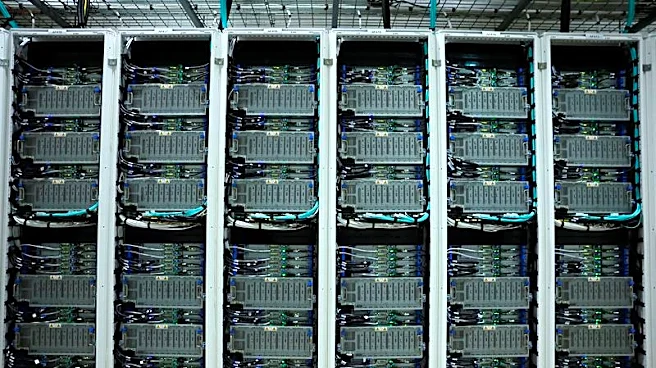
New Brunswick's initiative reflects a broader trend across New Jersey, where numerous municipalities are implementing bans, restrictions, or moratoriums on data center development. This statewide movement is driven by concerns over significant electricity and water demands, noise pollution from cooling equipment and generators, and potential environmental and neighborhood impacts. The proposed regulations aim to mitigate these concerns by ensuring responsible development and protecting local communities. For the U.S. technology and real estate sectors, this trend signifies increasing regulatory hurdles for data center expansion, potentially driving up development costs or shifting investment to more permissive regions. The push for local control over such infrastructure highlights a growing tension between technological advancement and community preservation, impacting economic stakeholders involved in data storage and cloud computing.
What's Next?
The New Brunswick Planning Board is scheduled to review the proposed regulations for consistency with the city's master plan and will then make recommendations. Following this, the City Council will decide whether to adopt these measures, which, if approved, would become law. City officials view these proposed rules as an interim step while a more comprehensive review of long-term land-use planning is conducted over the next four to six months. This broader review will involve professional planning, engineering, environmental, infrastructure, and legal analysis. Meanwhile, the statewide trend of municipalities adopting similar restrictions is expected to continue, with state-level lawmakers also planning to introduce more than a dozen data center bills. This suggests a future where data center development in New Jersey will face increasingly stringent local and state-level oversight.
Beyond the Headlines
The widespread municipal response to data center development in New Jersey underscores a growing public and governmental awareness of the environmental and social footprint of digital infrastructure. Beyond the immediate concerns of noise and resource consumption, this trend touches upon broader issues of sustainable urban planning, energy policy, and the balance between economic growth and environmental protection. The demand for data centers, fueled by the expansion of artificial intelligence, cloud computing, and cryptocurrency mining, presents a challenge to local governments striving to maintain community character and ecological integrity. This situation could lead to innovative solutions in data center design and operation, emphasizing energy efficiency and reduced environmental impact, or it could push such developments to regions with less stringent regulations, creating new geographical disparities in technological infrastructure.