








What's Happening?
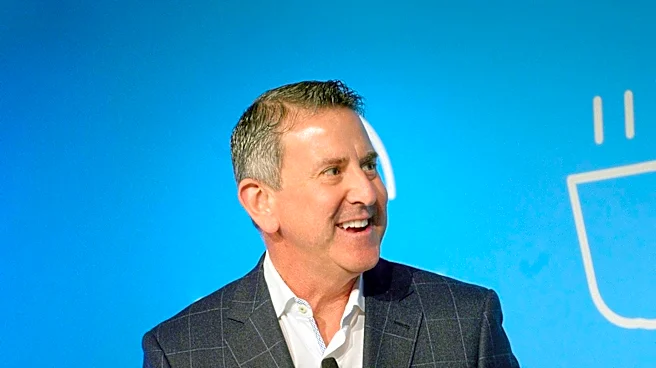
Alex Gorsky, widely recognized for his tenure as chairman and CEO of Johnson & Johnson, has transitioned from his executive role but remains a significant figure in the corporate world. Gorsky served as CEO of Johnson & Johnson from 2012 and stepped down
as executive chairman in January 2023. His career at Johnson & Johnson, which he joined in 1988, involved various management positions in sales, marketing, and business operations. He briefly left the company in 2004 to lead Novartis Pharmaceuticals Corporation's North American pharmaceutical business before returning to Johnson & Johnson in 2008. During his leadership, Johnson & Johnson was involved in key healthcare developments, including the single-shot COVID-19 vaccine and Ebola vaccine development. Post-Johnson & Johnson, Gorsky has taken on board positions at major companies such as Apple, IBM, and JPMorgan Chase, extending his influence beyond the healthcare sector.
Why It's Important?
Alex Gorsky's continued presence on the boards of prominent U.S. corporations like Apple, IBM, and JPMorgan Chase signifies his enduring influence on American business and potentially on public policy. His experience leading a global healthcare giant during critical periods, such as the COVID-19 pandemic, provides him with unique insights into complex operational and strategic challenges. His involvement in diverse sectors, from technology to finance, suggests a broader impact on corporate governance and strategic direction across multiple industries. For these companies, Gorsky brings a wealth of experience in large-scale management, innovation, and navigating regulatory landscapes. His role could influence decisions related to technological advancements, financial strategies, and corporate social responsibility, affecting shareholders, employees, and consumers across these sectors.
What's Next?
Gorsky's ongoing board memberships indicate a continued engagement in shaping the strategic directions of some of the largest U.S. companies. His insights, particularly from his extensive background in healthcare and large-scale corporate management, will likely contribute to discussions on innovation, market expansion, and risk management within these organizations. Future developments could include his involvement in significant corporate decisions, mergers and acquisitions, or the adoption of new technologies. His presence on these boards also suggests a potential for cross-industry collaboration or the application of best practices from one sector to another, given his diverse portfolio of board roles. Stakeholders will be observing how his experience translates into tangible impacts on the performance and strategic initiatives of these companies.
Beyond the Headlines
The transition of high-profile executives like Alex Gorsky from direct operational leadership to influential board roles highlights a broader trend in corporate governance. This shift allows seasoned leaders to leverage their expertise for strategic oversight without the day-to-day operational burdens. It also raises questions about the concentration of power and influence within a small group of experienced individuals across multiple major corporations. Gorsky's career trajectory, from military service to leading a pharmaceutical giant and now advising tech and finance leaders, underscores the evolving nature of leadership in the 21st century. His involvement in companies at the forefront of technology and finance could also subtly influence ethical considerations and corporate responsibility standards, given the increasing scrutiny on these sectors. The long-term implications could include a more integrated approach to corporate strategy, where insights from healthcare, technology, and finance converge to address complex global challenges.