





What's Happening?
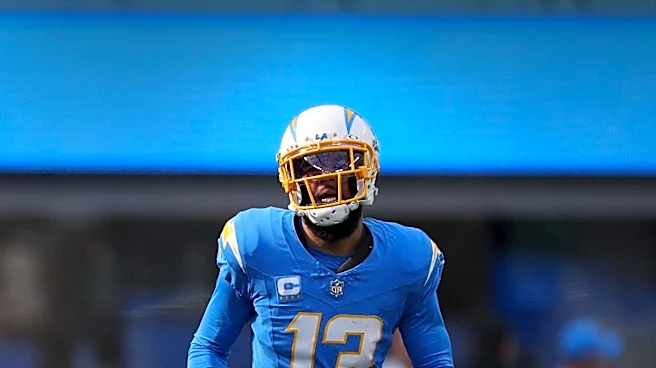
Omarion Hampton, a running back for the Los Angeles Chargers, is experiencing a challenging 2026 NFL season marked by decreased performance and lingering injury concerns. After a promising start in 2025, which included his best professional game against
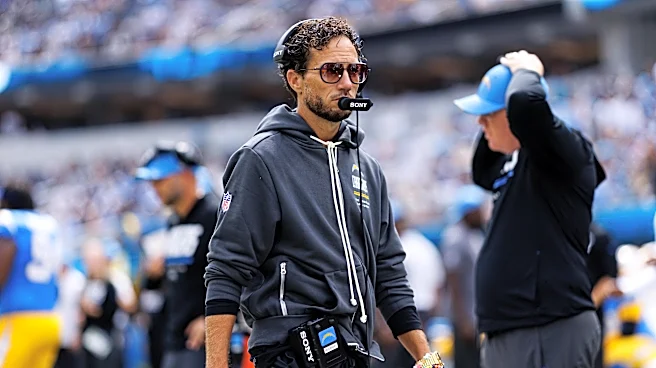
the Giants, Hampton suffered an ankle injury that sidelined him for two months. Upon his return, he averaged 4 yards per attempt while sharing time with Kimani Vidal. He then sustained another ankle injury before the playoffs, limiting his participation in the wild-card loss to the Patriots. Under new coordinator Mike McDaniel in 2026, Hampton has averaged 3.6 yards per carry in a rotational role alongside Vidal and Keaton Mitchell. He has also lost two fumbles, impacting his overall value. His success rate is 37.5%, below the league average of 39.4% for running backs. A significant concern is his reduced explosiveness; in 2025, he topped 18 mph 12 times across 156 touches, but in 2026, he has only reached that speed three times in 89 touches and has not exceeded 19 mph.
Why It's Important?
Hampton's struggles are significant for the Los Angeles Chargers, particularly given his status as a first-round pick. The team's investment in him was based on his size, physicality, and 4.46 speed, with expectations that he would thrive in McDaniel's offense, known for creating explosive running lanes. His current performance, characterized by a lower-than-expected yards per carry and a high rate of runs resulting in no gain or a loss, raises questions about the return on that investment. The lack of explosive plays from Hampton, who is projected to average 4.1 yards per carry based on blocking but is performing half a yard below that, indicates a potential mismatch or a lingering effect of his ankle injuries. This situation impacts the Chargers' offensive strategy and effectiveness, as a productive running game is crucial for balancing their attack and alleviating pressure on the passing game. The team's inability to fully utilize a high-draft-pick running back could also influence future draft decisions and roster construction.
What's Next?
The immediate future for Omarion Hampton involves continued efforts to regain his form and explosiveness. The Chargers' coaching staff will likely assess whether his performance issues are due to lingering physical limitations from his ankle injuries or a struggle to adapt to the offensive scheme. Given the team's current offensive struggles and injuries along the offensive line, it will be critical to determine if improved blocking can unlock Hampton's potential. If his performance does not improve, the Chargers may need to re-evaluate his role, potentially increasing the workload for other running backs like Kimani Vidal or Keaton Mitchell. The team will also need to consider how to mitigate his fumbling issues, which have negatively impacted his value. Long-term, if Hampton cannot consistently produce at the level expected of a first-round pick, it could lead to questions about his future with the team and the strategy of drafting running backs early in the NFL Draft.
Beyond the Headlines
Hampton's situation highlights the inherent risks and challenges associated with drafting running backs in the first round of the NFL Draft. Despite his collegiate success and athletic profile, injuries and the demanding nature of the professional game can quickly derail a player's trajectory. The debate over positional value, particularly for running backs, often centers on their short career spans and susceptibility to injuries. Hampton's case could serve as another example for teams to consider when allocating high draft capital to the position. Furthermore, the impact of coaching changes and offensive scheme on a player's performance is evident; while new coordinator Mike McDaniel was expected to elevate Hampton's game, the results have yet to materialize. This underscores the complex interplay of player talent, coaching philosophy, and team dynamics in professional sports, where even highly touted prospects can face significant hurdles in meeting expectations.