






What's Happening?
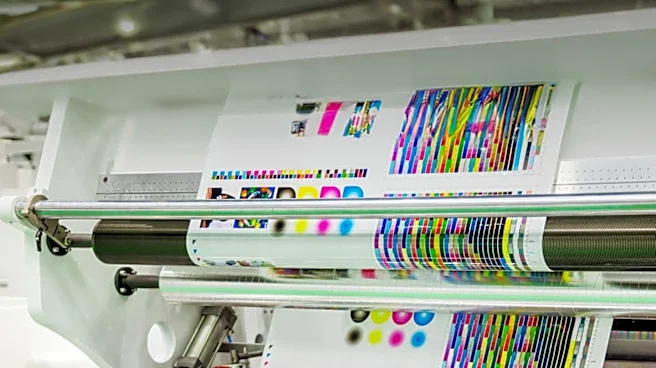
PrintingCenterUSA has provided a guide explaining the benefits and applications of bulk offset printing. This method is designed for producing large quantities, typically ranging from 500 to 50,000 copies, using an offset press. The process involves metal
plates to transfer images to paper. While the initial setup for offset printing takes longer, once the press is operational, it prints very quickly, leading to a significant reduction in cost per piece. The guide contrasts bulk offset printing with short-run digital printing, which is more suitable for smaller quantities (10 to 1,000 copies) due to its quicker and cheaper setup without the need for printing plates. The company advises customers to consider bulk offset printing when they require 1,000 or more copies, have a stable design, and aim for the lowest cost per piece.
Why It's Important?
This information is crucial for U.S. businesses and organizations that frequently require printed materials in varying quantities. Understanding the cost-effectiveness of bulk offset printing versus short-run digital printing can significantly impact operational budgets and marketing strategies. For businesses needing large volumes of brochures, catalogs, or magazines, opting for bulk offset printing can lead to substantial savings per unit, making large-scale campaigns more economically viable. Conversely, for smaller businesses or those needing to frequently update content, short-run digital printing offers flexibility and reduces waste. The ability to choose the most appropriate printing method based on quantity, design stability, and budget directly affects a company's ability to manage costs and efficiently disseminate information, impacting their competitive edge in the market.
What's Next?
Businesses planning printing projects will need to evaluate their specific needs against the outlined advantages and limitations of both bulk offset and short-run digital printing. PrintingCenterUSA suggests obtaining quotes for both methods when quantities fall between 500 and 1,000 copies to determine the most cost-effective option. This decision-making process will involve considering factors such as page count, size, paper type, and the frequency of content updates. Companies with stable designs and high volume requirements are likely to continue favoring bulk offset printing to maximize cost savings, while those with dynamic content or smaller distribution needs will lean towards digital solutions. The ongoing evolution of printing technology may further refine these cost-benefit analyses in the future.
Beyond the Headlines
The distinction between bulk offset and short-run digital printing highlights a broader trend in manufacturing and service industries: the balance between economies of scale and customization. Bulk offset printing exemplifies the traditional model of achieving lower unit costs through mass production, which is essential for industries that rely on widespread physical distribution. In contrast, short-run digital printing reflects the growing demand for agility, personalization, and reduced waste, aligning with modern business practices that prioritize responsiveness and sustainability. This dual approach allows businesses to optimize their printing strategies for different objectives, from broad market penetration to niche targeting, influencing how information and products are physically disseminated across various sectors of the U.S. economy.