

What's Happening?
Dana Santas, a certified strength and conditioning specialist, emphasizes the importance of dynamic core stability over rigidity in fitness routines. Excessive core tension can limit mobility, restrict breathing, and trigger stress responses. Instead,
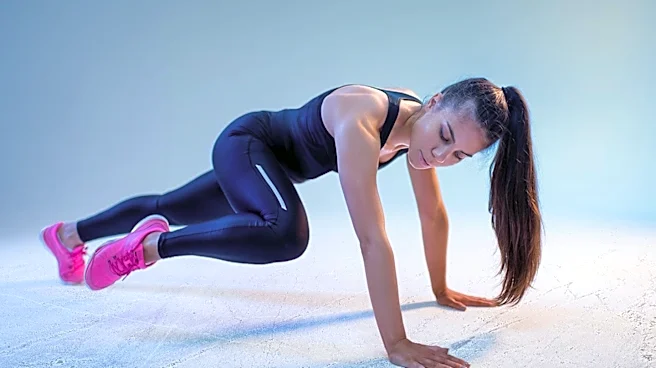
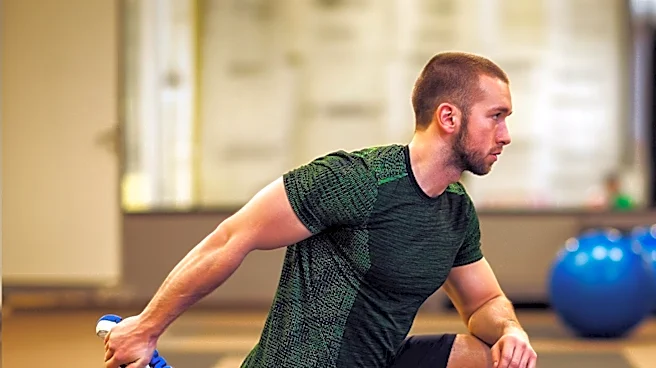
Santas advocates for a responsive core that adapts to changing demands without restricting movement. She provides exercises like the dead bug, sideways bear crawl, and split-stance rotation to train dynamic core stability. These exercises aim to enhance functional core strength, allowing for greater freedom of movement and more efficient use of strength. This approach challenges traditional fitness advice that often emphasizes constant core bracing.
Why It's Important?
The shift towards dynamic core stability reflects a broader trend in fitness and wellness that prioritizes functional movement and holistic health. By focusing on adaptability rather than rigidity, this approach can improve overall physical performance and reduce the risk of injury. It also aligns with contemporary understandings of the body's biomechanics, which emphasize the interconnectedness of muscle groups and the importance of maintaining balance and flexibility. This perspective could influence fitness training programs and public health recommendations, encouraging individuals to adopt more sustainable and effective exercise practices.