



What's Happening?
Retro walking, the practice of walking backwards, is gaining attention for its potential health benefits. Research suggests that this unconventional form of movement can lead to better outcomes for individuals with arthritis when combined with conventional treatment.
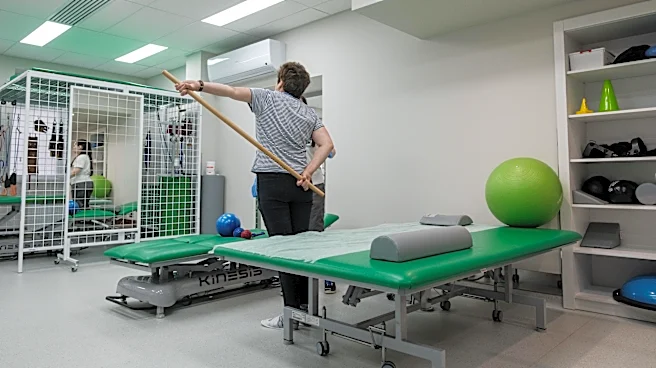
It has also been linked to reduced back pain among athletes and improved balance, gait speed, and lower body benefits for older adults compared to traditional forward walking. Some studies even indicate a potential boost in brain power. Dr. Suzanne Wylie, a GP and medical adviser for IQdoctor, notes that while doctors don't typically 'prescribe' retro walking, it is increasingly recognized in physiotherapy and rehabilitation for its utility in improving balance, mobility, and addressing certain joint problems. The practice involves using different muscle groups and placing varied loads on joints, particularly activating quadriceps more and reducing compressive stress on the kneecap.
Why It's Important?
The emergence of retro walking as a beneficial exercise is significant for public health, offering a simple yet effective method to address common physical ailments. For individuals suffering from arthritis or back pain, it provides a non-pharmacological intervention that can complement existing treatments. Its benefits for balance and gait speed are particularly crucial for older populations, potentially reducing the risk of falls and improving overall functional independence. The low-impact nature of retro walking makes it accessible to many who might struggle with more strenuous exercises. This trend could lead to its wider adoption in rehabilitation programs and personal fitness routines, offering a novel approach to physical well-being and potentially reducing healthcare burdens associated with mobility issues.
What's Next?
As awareness of retro walking's benefits grows, it is likely to see increased integration into physical therapy protocols and fitness recommendations. Healthcare providers and fitness instructors may begin to incorporate backward walking exercises into their programs, especially for patients with joint issues, balance problems, or those recovering from injuries. Further scientific research is anticipated to explore the full spectrum of its benefits, optimal duration, and frequency for various conditions. Educational initiatives may also be launched to inform the public about safe practices for retro walking, emphasizing the importance of starting with short sessions on flat, safe surfaces, or using treadmills with handrails to prevent falls and ensure effectiveness.
Beyond the Headlines
Retro walking challenges conventional notions of movement and exercise, highlighting that sometimes, looking backward can lead to forward progress in health. It underscores the body's adaptability and the diverse ways in which physical activity can stimulate different muscle groups and neurological pathways. This practice also taps into the psychological aspect of exercise, as engaging in an unusual movement like walking backwards requires heightened focus and coordination, potentially offering cognitive benefits beyond physical ones. The growing interest in such 'alternative' walking methods, alongside trends like metabolic walking, suggests a broader cultural shift towards exploring varied and nuanced approaches to fitness, moving beyond one-size-fits-all exercise prescriptions.