



What's Happening?
SES, a global leader in space solutions, has announced an expanded strategic investment and collaboration with Elveo Mobile (Elveo). Elveo is a new company formed from the merger of Lynk and Omnispace, specializing in direct-to-device (D2D) services.
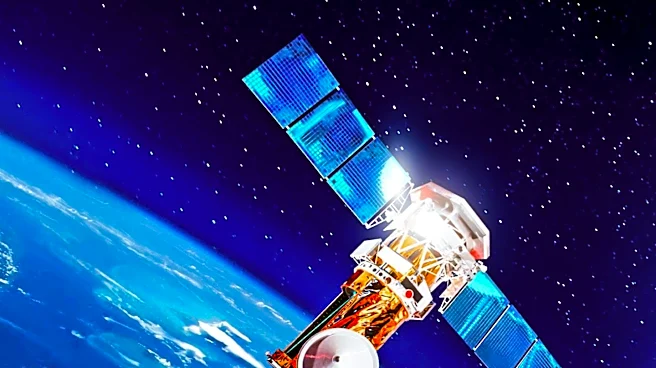
This partnership aims to accelerate the delivery of powerful and cost-effective global D2D services, enabling mobile connectivity from space to various devices worldwide. SES will provide support to Elveo in its go-to-market strategies, engineering, operations, and regulatory needs, leveraging its extensive global space and ground infrastructure. The collaboration will also focus on global spectrum initiatives to facilitate Elveo's D2D solutions. This move is expected to enhance current services for SES's mobile telecom, enterprise, and government customers by offering multi-orbit access to Elveo's low-Earth orbit (LEO) network in conjunction with SES's existing GEO and MEO networks. The goal is to deliver the first truly multi-orbit integrated and cost-effective D2D satellite solution.
Why It's Important?
This strategic collaboration is significant for the U.S. and global telecommunications industry as it aims to bridge digital divides and expand connectivity to underserved areas. By combining SES's established infrastructure with Elveo's D2D capabilities, the partnership could revolutionize how mobile connectivity is delivered, particularly in remote or challenging environments. For U.S. businesses and consumers, this could mean more reliable and widespread access to mobile services, potentially fostering economic growth and innovation in various sectors, including enterprise, government, and mobile telecommunications. The development of a multi-orbit integrated D2D satellite solution could set a new standard for satellite communication, offering enhanced resilience and coverage. Companies involved in mobile device manufacturing, telecommunications, and data services stand to gain from the expanded market opportunities and technological advancements. Conversely, traditional terrestrial network providers might face increased competition from space-based solutions, prompting them to innovate and adapt their services.
What's Next?
Following this expanded strategic investment, SES and Elveo Mobile will focus on accelerating the delivery of global D2D services and working on global spectrum initiatives. This will involve integrating Elveo's LEO network with SES's GEO and MEO networks to create a comprehensive multi-orbit satellite solution. The immediate next steps will likely include further technological development, regulatory approvals for spectrum usage, and the rollout of enhanced services to existing and new customers. Both companies will be working to bring their D2D solutions to market, with a focus on expanding connectivity for mobile telecom, enterprise, and government clients. The collaboration is expected to lead to the deployment of advanced satellite communication technologies, potentially impacting the competitive landscape of the telecommunications industry. Stakeholders, including mobile network operators and government agencies, will be closely watching the progress of this partnership as it aims to deliver widespread and cost-effective D2D connectivity.
Beyond the Headlines
The deeper implications of this collaboration extend to the fundamental shift in how connectivity is perceived and delivered. The integration of multi-orbit satellite networks for direct-to-device services could democratize access to information and communication, particularly in regions where traditional infrastructure is lacking or cost-prohibitive. This could have profound societal impacts, enabling greater access to education, healthcare, and economic opportunities for previously unconnected populations. Ethically, ensuring equitable access and managing the digital divide will be crucial as these technologies advance. Legally, the expansion of global spectrum initiatives and the regulatory frameworks governing space-based communication will need to evolve to accommodate these new capabilities. Culturally, increased connectivity could foster greater global interconnectedness but also raise questions about data privacy and digital sovereignty. In the long term, this development could accelerate the trend towards a more interconnected world, where seamless communication is a universal expectation, driving further innovation in related fields like IoT and AI.