






What's Happening?
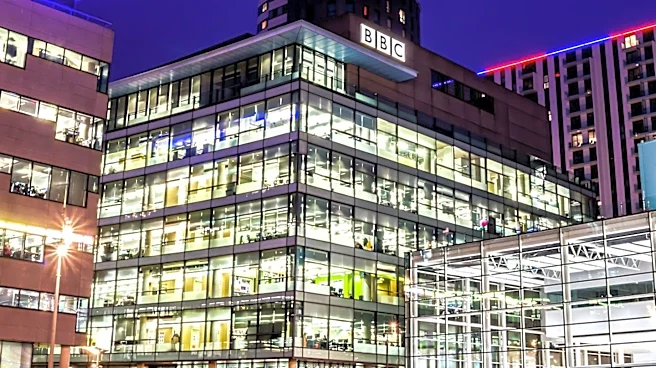
Former BBC 'Top of the Pops' producer Gareth Davies has revealed what he described as 'unusual' backstage demands made by Jennifer Lopez during her appearance on the show. According to Davies, Lopez's team requested that all her dressing rooms be decorated
entirely in white. This involved covering an entire corridor and multiple rooms with white plastic film. Davies, who dubbed Lopez the 'sassiest' celebrity he had worked with, also claimed that she required a white microphone to match the all-white aesthetic. He stated that a significant amount of time, money, and effort was expended to meet these specific requests, which he found to be highly unconventional for the BBC at the time. These details were shared in an interview with Page Six, where Davies reflected on his experiences bringing artists from backstage to the set for their performances.
Why It's Important?
This revelation offers a glimpse into the meticulous and sometimes extravagant demands that can be associated with high-profile entertainers in the music industry. It highlights the extensive logistical and financial efforts undertaken by production teams to accommodate celebrity preferences, even for seemingly minor details like room decor and microphone color. Such demands can influence production budgets, scheduling, and the overall working environment for television crews. For artists, these requests often serve to create a specific brand image or ensure a comfortable and controlled environment that aligns with their artistic vision. The public's perception of celebrities can also be shaped by such stories, contributing to narratives about their professionalism, personality, and the perceived 'diva' status often attributed to stars with unique requirements.
What's Next?
While this information pertains to a past event, it contributes to the ongoing public discourse surrounding celebrity behavior and expectations in the entertainment industry. Such anecdotes often resurface in media discussions, influencing how current and aspiring artists are viewed. For production companies and event organizers, these stories serve as informal case studies, potentially leading to more detailed contract negotiations or pre-production planning to manage celebrity riders. Future interactions between high-profile artists and production teams may continue to be scrutinized for similar 'unusual' demands, with media outlets eager to report on any perceived eccentricities. The broader conversation about the balance between artistic freedom and practical production constraints is likely to persist.
Beyond the Headlines
The story touches upon the broader cultural phenomenon of celebrity branding and the construction of public personas. Jennifer Lopez, known for her 'Jenny from the Block' image, is portrayed in this account as having a highly specific and demanding approach to her professional environment. This contrast can spark discussions about authenticity versus curated image in the entertainment world. Furthermore, it sheds light on the power dynamics inherent in the celebrity-production relationship, where the star's influence can dictate significant operational adjustments. The 'all-white' demand, while seemingly superficial, could be interpreted as a desire for a pristine, controlled, and aesthetically consistent environment, reflecting a broader artistic or personal philosophy. This incident, though minor, contributes to the rich tapestry of celebrity lore and the public's fascination with the behind-the-scenes realities of fame.