








What's Happening?
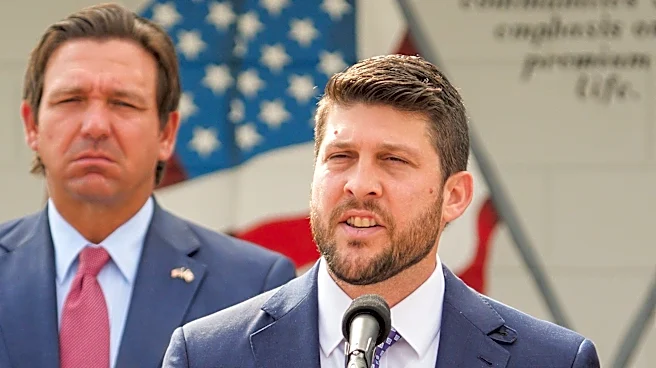
Florida Governor Ron DeSantis, speaking at the University of Alabama, predicted an eventual 'crash' in the extraordinary financial boom surrounding artificial intelligence (AI) investment. He warned that the significant amount of money flowing into AI companies
and hyperscale data centers is creating a bubble. DeSantis raised concerns that if this bubble bursts, the government might be pressured to bail out companies deemed 'too important to fail,' potentially at taxpayer expense. He clarified that he is not predicting the disappearance of AI as a technology, but rather a financial shakeout among the companies and infrastructure racing to capitalize on it. DeSantis noted that some AI companies are seeking government involvement, which he believes could entrench current major players, hinder new competitors, and ultimately lead to these companies being considered systemically important to the economy, thus requiring government intervention during financial struggles.
Why It's Important?
Governor DeSantis's warning about an AI investment crash and potential taxpayer bailouts is significant for several reasons. It highlights growing concerns within political circles about the stability of the rapidly expanding AI sector and its potential economic ramifications. A financial downturn in the AI industry could have widespread effects on the U.S. economy, impacting investment, employment, and technological innovation. The prospect of government bailouts raises questions about moral hazard, market intervention, and the allocation of public funds, potentially sparking debates about the role of government in regulating and supporting emerging technologies. His comments also touch upon the increasing controversy surrounding hyperscale data centers, which are crucial for AI development but face local opposition due to concerns about electricity demand, water consumption, and land use. This could lead to increased scrutiny and regulation of data center development, affecting the infrastructure necessary for AI growth. The discussion underscores the tension between fostering technological advancement and ensuring financial stability and public accountability.
What's Next?
Governor DeSantis's prediction could prompt increased scrutiny from policymakers and financial regulators regarding the AI investment landscape. While he did not propose specific immediate actions, his concerns may fuel calls for greater transparency in AI investments and discussions about potential regulatory frameworks to prevent or mitigate a financial crash. The debate over government involvement in the tech sector, particularly concerning potential bailouts, is likely to intensify, influencing future policy decisions related to emerging technologies. Local communities, already grappling with the impact of hyperscale data centers, may find renewed support for their efforts to regulate or impose moratoria on such projects. This could lead to a more fragmented and localized approach to AI infrastructure development across the U.S. Furthermore, DeSantis's remarks might encourage a broader public discourse on the balance between technological progress, economic stability, and the responsible use of taxpayer money, potentially shaping future legislative agendas.
Beyond the Headlines
Beyond the immediate financial implications, Governor DeSantis's comments delve into the deeper ethical and societal questions surrounding the rapid advancement of AI. His concern about companies becoming 'too big to fail' and seeking government entanglement highlights a potential shift in the relationship between the tech industry and the state, moving towards a model where private innovation is increasingly intertwined with public support and potential liabilities. This raises questions about corporate responsibility, market competition, and the long-term impact on innovation if established players are shielded from market forces. The discussion also touches on the public's anxiety about technological change, particularly regarding job displacement and the feeling that society is being pushed into a future it 'never consented to.' DeSantis's emphasis on technology enhancing the human experience, rather than supplanting it, reflects a broader philosophical debate about the purpose and direction of technological development, potentially influencing future policy discussions on AI ethics, regulation, and its role in society.