









What's Happening?
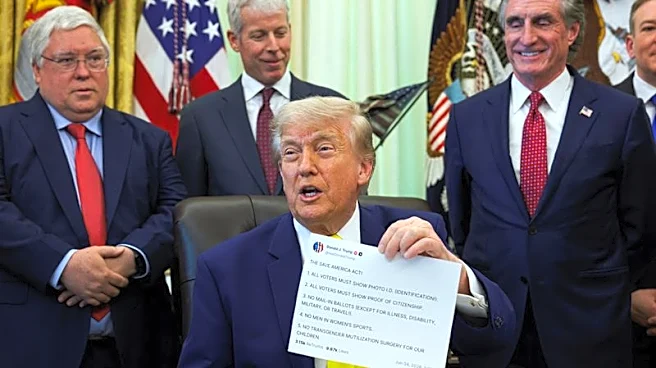
Trump Media & Technology Group, the owner of Truth Social, has reportedly proposed charging Wall Street traders and investment firms up to $100,000 per month for expedited access to President Trump's posts. This initiative, known as the 'Truth API', aims
to provide the fastest access to posts from the most influential accounts on the platform. The company has also offered a discounted rate of $60,000 per month for firms committing to a three-year plan. This move marks the company's first foray into data licensing, potentially opening a new revenue stream. However, it has drawn criticism from Democrats, including U.S. Senator Ron Wyden, who argues it would financially benefit the Trump family and enrich Wall Street traders. The White House has deferred comments to Trump Media, which has not responded.
Why It's Important?
The proposal to monetize access to President Trump's social media posts could have significant implications for financial markets and political ethics. High-frequency trading firms could gain a competitive edge by accessing market-moving information milliseconds faster than others, potentially leading to substantial financial gains. This raises ethical concerns about the intersection of political influence and financial profit, as critics argue it could be seen as profiting from the presidency. The initiative also highlights the ongoing challenges Trump Media faces in establishing a sustainable business model amid competition from larger social media platforms.
What's Next?
The launch of the Truth API is scheduled for August 1, with some customers reportedly already signed up. The development may prompt further scrutiny from political and financial regulators, as well as potential legislative responses. The ethical implications of the proposal could lead to debates about the need for new regulations governing the use of social media by public officials and the commercialization of political influence.
Beyond the Headlines
The proposal raises questions about the potential for conflicts of interest and the ethical boundaries of monetizing political influence. While the Constitution's emoluments clauses do not apply, the situation underscores the need for clear guidelines on the financial activities of public officials. The initiative also reflects broader trends in the digital economy, where data and information access are increasingly commodified.