



What's Happening?
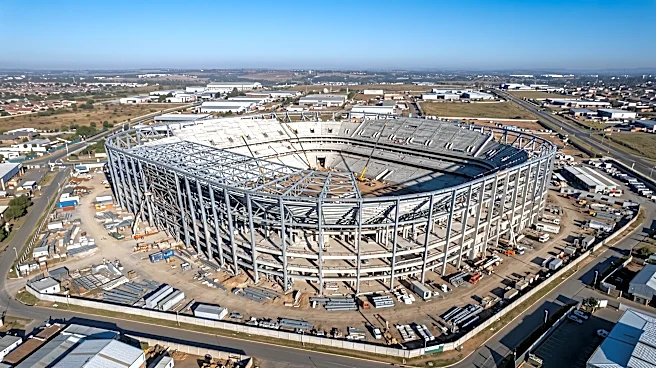
Construction of Luton Town Football Club's new Power Court Stadium is visibly progressing, with aerial video showing the new terraces taking shape. Workers have been on site for over a year, but recent weeks have marked significant advancements in the stadium's
structure. The club aims to complete the 25,000-seat venue by the start of the 2028-29 football season. This new stadium will replace Kenilworth Road, Luton Town's home for 119 years, which currently has a capacity of 12,000 and hosts League One matches. The development signifies a major upgrade for the club's facilities and its future in professional football.
Why It's Important?
The construction of a new stadium is a significant milestone for Luton Town Football Club, indicating ambition and a long-term vision for growth. A larger, modern venue can substantially increase matchday revenue through higher attendance and improved hospitality offerings, which is crucial for financial stability and competitiveness in professional sports. For the local community, the stadium project can bring economic benefits through job creation during construction and ongoing operations, as well as increased visitor traffic on match days. It also represents a potential boost to local pride and identity, providing a state-of-the-art facility for fans and a symbol of the club's progress. The move from a historic but smaller stadium to a larger one reflects a common trend in sports clubs seeking to modernize and expand their fan base.
What's Next?
Construction will continue over the next few years, with the focus on completing the structural elements, followed by interior fittings, seating installation, and pitch development. The club will likely provide regular updates on the progress to its supporters and stakeholders. As the completion date of the 2028-29 season approaches, there will be significant planning required for the transition from Kenilworth Road to Power Court, including logistical arrangements for match days, fan experience enhancements, and potential commercial partnerships for the new venue. The club will also need to ensure that the new stadium meets all safety and regulatory standards for hosting large-scale sporting events.
Beyond the Headlines
The development of the Power Court Stadium extends beyond just a new sporting venue; it often serves as a catalyst for urban regeneration in the surrounding area. Large-scale projects like this can attract further investment in infrastructure, housing, and commercial developments, transforming the local landscape. There may also be discussions around the future of the historic Kenilworth Road stadium once the club relocates, with potential plans for redevelopment or preservation. The new stadium's design and facilities could also influence future fan engagement strategies, incorporating modern technologies and amenities to enhance the matchday experience. This move represents a significant cultural shift for long-standing fans, balancing tradition with the demands of modern football.