







What's Happening?
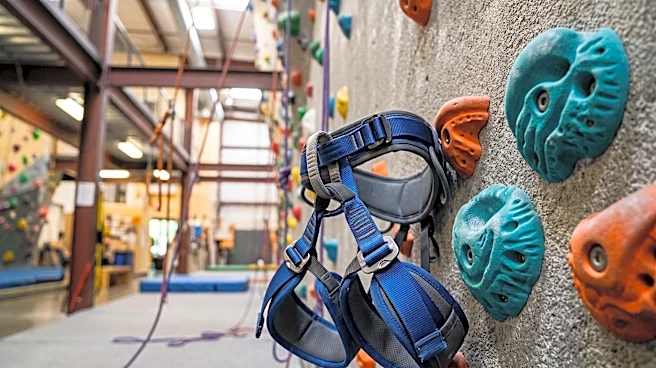
Erik Weihenmayer, the first blind athlete to summit Mount Everest, recently spent time with visually impaired young people at a rock climbing gym in Watertown, Massachusetts. The session, captured in a CBS News Boston video, focused on teaching these
children how to navigate a climbing wall without the benefit of sight. Weihenmayer, known for being the only blind athlete to have scaled the world's Seven Summits, demonstrated techniques for identifying holds and movements. This event took place at Watertown's Central Rock Gym, which has a standing program called CRG Adaptive, dedicated to climbers with disabilities. The gym offers discounted rates and requires advance registration to ensure adequate volunteer and rigging support for participants. This initiative highlights the gym's commitment to making rock climbing accessible to a diverse range of athletes.
Why It's Important?
This event is significant as it promotes inclusivity and demonstrates that physical challenges do not have to be barriers to participating in sports like rock climbing. Erik Weihenmayer's involvement provides powerful inspiration and practical guidance to visually impaired youth, showing them that extraordinary achievements are possible. For the visually impaired community, such initiatives foster confidence, independence, and a sense of accomplishment. The Central Rock Gym's CRG Adaptive program serves as a model for other athletic facilities, illustrating how to create supportive environments for individuals with disabilities. This not only benefits the participants directly but also raises public awareness about adaptive sports and the importance of accessible recreational opportunities, potentially encouraging broader adoption of similar programs nationwide.
What's Next?
The CBS News Boston video and associated reports are expected to further raise the profile of adaptive climbing and the CRG Adaptive program at Central Rock Gym. This increased visibility could lead to more visually impaired individuals and their families seeking out such opportunities. It may also inspire other climbing gyms and sports organizations to develop or expand their own adaptive programs, potentially leading to a wider network of accessible sports facilities across the U.S. Erik Weihenmayer's continued engagement in mentoring visually impaired athletes suggests that similar events may occur in the future, further solidifying his role as an advocate and guide in the adaptive sports community. The success of this session could also encourage more research and development into adaptive climbing techniques and equipment.
Beyond the Headlines
Beyond the immediate impact of the climbing session, this event touches upon deeper themes of human resilience and the power of mentorship. Weihenmayer's ability to teach visually impaired children to climb without sight challenges conventional perceptions of disability and ability. It underscores the idea that limitations are often perceived rather than inherent, and that with the right support and innovative approaches, individuals can overcome significant obstacles. The use of adaptive techniques, such as those explored by Matthew Shifrin with Lego-based systems for navigating climbing routes, highlights the role of creative problem-solving in making activities accessible. This story also subtly emphasizes the importance of community spaces like Central Rock Gym that actively foster an inclusive environment, contributing to a more equitable society where diverse needs are met.