





What's Happening?
Hundreds of permanent layoffs have been announced at Nexteer Automotive's Saginaw, Michigan complex, following similar job cuts at Dakkota Integrated Systems and other auto suppliers across the state. These layoffs occur months after the United Auto Workers
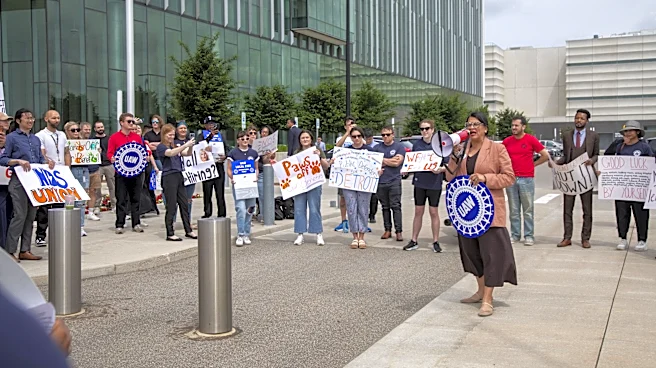
(UAW) imposed a contract at Nexteer that workers had previously rejected multiple times. The UAW is being criticized for enforcing corporate restructuring, with some laid-off Nexteer workers being offered part-time positions at $27 an hour without vacation or benefits, effectively creating a new low-wage tier. Other companies like Inalfa Roof Systems Inc., ADAC Automotive, Detroit Chassis, Woodbridge Group, J.G. Kern Enterprise, Inc., and Lear Corporation have also announced significant job reductions or plant closures in Michigan. General Motors is also set to lay off 350 workers in Lansing-area plants. These developments are seen as part of a broader global economic crisis impacting the automotive industry.
Why It's Important?
The wave of layoffs in the Michigan automotive sector highlights the ongoing challenges faced by U.S. manufacturing workers and the complex role of labor unions. The criticism directed at the UAW for its alleged enforcement of corporate dictates rather than worker interests could erode trust in union leadership and impact future labor negotiations. The creation of lower-wage, benefit-free part-time positions, as seen at Nexteer, could set a precedent for other companies, potentially leading to a decline in overall worker compensation and benefits within the industry. This trend could exacerbate economic inequality and put pressure on local economies dependent on manufacturing jobs. The broader restructuring of the global auto industry, influenced by factors like the electric vehicle transition and international trade dynamics, suggests a period of significant instability for U.S. autoworkers and related industries.
What's Next?
The ongoing restructuring in the automotive industry is expected to continue, with further job cuts anticipated across manufacturing. The UAW's approach to these layoffs and contract negotiations will likely face increased scrutiny from its members and the public. Workers may seek alternative forms of organization, such as rank-and-file committees, to advocate for their interests independently of the established union apparatus. The impact of these layoffs on local communities in Michigan will likely necessitate responses from state and local governments to address unemployment and economic displacement. The long-term shift towards electric vehicles and automation will continue to reshape the automotive workforce, requiring new skills and potentially leading to further job reconfigurations.
Beyond the Headlines
The current situation in the Michigan auto industry points to deeper ethical and economic questions regarding the balance of power between corporations, labor unions, and individual workers. The alleged role of the UAW in enforcing contracts that workers initially rejected raises concerns about democratic processes within unions and the potential for union bureaucracies to prioritize corporate interests over those of their members. The trend of creating precarious, low-wage employment without benefits could have long-term societal implications, contributing to a growing gig economy and undermining the traditional stability of manufacturing jobs. This development also highlights the broader impact of globalization and technological advancements on the U.S. workforce, prompting a reevaluation of labor protections and economic safety nets.