








What's Happening?
Andreessen Horowitz (a16z) has announced the creation of its first dedicated hardware fund, the $1.1 billion Machine Age Fund. This new fund will focus on investing in the physical infrastructure necessary to support the rapid expansion of artificial
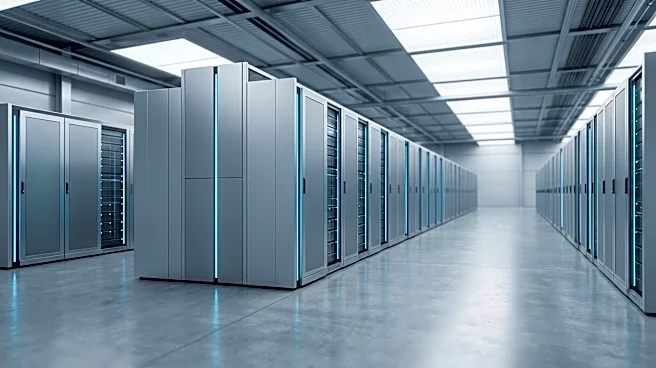
intelligence. The fund's mandate covers a broad range of technologies, including AI chips, data storage, networking, data centers, power infrastructure, and robotics. General Partners David George and Erik Torenberg emphasized that the current AI transition necessitates a fundamental rebuilding of computing infrastructure, moving beyond just software and models to the underlying physical components. This strategic shift by a16z reflects a broader trend in Silicon Valley, where major venture capital firms are increasingly directing capital towards physical AI infrastructure due to growing bottlenecks in hardware capacity. The firm notes that while hardware suppliers typically grow at 20-30% annually, AI-driven demand requires triple-digit growth, creating a significant opportunity for investment in this sector.
Why It's Important?
The launch of the Machine Age Fund signifies a pivotal shift in venture capital investment strategies, acknowledging that the future of AI is heavily reliant on robust physical infrastructure. This move is critical for the U.S. technology sector as it addresses the growing bottlenecks in AI compute capacity, which extends beyond just processors to include power, cooling, networking, and data center design. By investing in these foundational elements, a16z aims to accelerate the development and deployment of advanced AI technologies, which could have profound impacts across various U.S. industries. Companies involved in semiconductor manufacturing, data center construction, energy management, and robotics stand to gain significantly from this influx of capital. Conversely, businesses that fail to adapt to these infrastructure demands or those heavily reliant on purely software-based AI solutions without considering the underlying hardware might face limitations in scaling and innovation. This investment also underscores the increasing capital intensity of the AI industry, potentially reshaping the competitive landscape and fostering new areas of technological innovation.
What's Next?
The Machine Age Fund is expected to deploy capital into startups across three main layers: compute and data movement (chips, memory, storage, networking), facility systems (data centers, power infrastructure), and physical AI products (edge hardware, smart-home appliances, robots). This will likely lead to increased innovation and competition in these sectors. Other major venture capital firms, including Sequoia Capital, Lightspeed, General Catalyst, and SoftBank, have already made similar moves, indicating a broader industry repositioning towards hardware. This trend suggests that more dedicated physical-infrastructure investment vehicles may emerge before the end of the year. For builders in this category, the focus will shift from convincing investors about hardware viability to demonstrating readiness for large-scale deployment. The increased funding will also likely drive advancements in energy efficiency and cooling solutions for data centers, as AI workloads demand significantly more power and generate more heat. The long-term impact could include the emergence of new industry leaders in AI hardware and infrastructure, further solidifying the U.S.'s position in the global AI race.
Beyond the Headlines
This shift towards investing in physical AI infrastructure highlights a deeper realization within the tech industry: the digital revolution, while driven by software, is ultimately constrained by its physical underpinnings. The 'software is eating the world' mantra is evolving to acknowledge that 'atoms are eating software's margins,' meaning the physical world is reasserting its importance in technological advancement. This has ethical implications regarding resource consumption, particularly energy and rare earth minerals, as the demand for AI infrastructure scales. Legal frameworks may need to adapt to address the complexities of large-scale data centers, energy grids, and the deployment of robotics. Culturally, this could lead to a renewed appreciation for engineering and manufacturing disciplines, potentially shifting the talent focus from pure software development to hardware design and systems integration. In the long term, this investment could trigger a renaissance in U.S. manufacturing and infrastructure development, creating new jobs and fostering a more integrated approach to technological innovation that bridges the digital and physical realms.