







What's Happening?
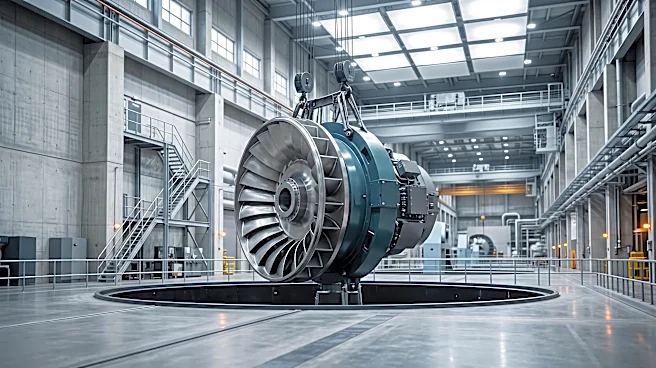
Ontario Power Generation (OPG) has initiated the reassembly of unit G7 at its Cameron Falls Generating Station in Ontario, Canada, following a significant turbine refurbishment. This unit is anticipated to resume service this winter. This refurbishment is part
of a broader, long-term renewal program for OPG's hydroelectric fleet. The company plans to modernize approximately 70% of its fleet, encompassing about 50 stations, over the next two decades. The modernization efforts involve a shift from traditional mechanical-hydraulic systems to more advanced electro-hydraulic systems. These new systems offer enhanced response speeds and incorporate fail-safe diagnostics, which are crucial for integrating variable-speed pumped storage technology. This technological evolution is expected to play a vital role in addressing the intermittency challenges associated with renewable energy sources.
Why It's Important?
The modernization of OPG's hydropower fleet is significant for the energy sector, particularly in the context of increasing reliance on renewable energy. The transition to electro-hydraulic systems with higher response speeds and fail-safe diagnostics will enhance the operational efficiency and reliability of hydropower generation. This is crucial for grid stability, especially as more intermittent renewable sources like wind and solar are integrated. Variable-speed pumped storage, supported by these technological advancements, allows for more flexible energy storage and release, helping to balance supply and demand fluctuations. The expansion of the Hydro Speed Regulator Market, driven by such modernization efforts, indicates a growing industry trend towards more adaptable and resilient hydropower infrastructure. This investment ensures a more stable and sustainable energy supply, benefiting consumers and industries by reducing the risks associated with energy intermittency.
What's Next?
The immediate next step is the return of unit G7 at Cameron Falls Generating Station to service this winter. Looking ahead, OPG will continue its ambitious 20-year program to refurbish about 70% of its hydroelectric fleet, involving approximately 50 stations. This ongoing modernization will likely see a widespread adoption of electro-hydraulic systems and variable-speed pumped storage technologies across OPG's operations. The broader energy sector can expect continued growth and innovation in the Hydro Speed Regulator Market as other hydropower operators follow suit in upgrading their infrastructure. This trend will contribute to a more robust and flexible energy grid, better equipped to handle the demands of a renewable-heavy energy landscape. Further technological advancements in turbine design and control systems are also anticipated to enhance efficiency and grid integration capabilities.
Beyond the Headlines
This modernization initiative by OPG highlights a deeper shift in how traditional energy sources are adapting to the demands of a renewable energy future. Hydropower, often seen as a stable but less flexible energy source, is being transformed into a dynamic component of the grid through technological upgrades. The move towards electro-hydraulic systems and variable-speed turbines signifies a recognition that all energy assets must become more adaptable to support the variability of wind and solar power. This evolution also underscores the increasing importance of smart grid technologies and advanced control systems in managing complex energy flows. Ethically, this commitment to upgrading existing infrastructure rather than solely building new plants demonstrates a sustainable approach to energy development, minimizing environmental impact while maximizing efficiency. It also sets a precedent for other utilities globally to invest in similar modernization efforts to ensure long-term energy security and environmental stewardship.