






What's Happening?
Manufacturers are increasingly turning to AI-powered supply chain orchestration to navigate the complexities of tariffs and geopolitical tensions. According to Kinaxis, a supply chain software provider, companies are moving beyond traditional planning
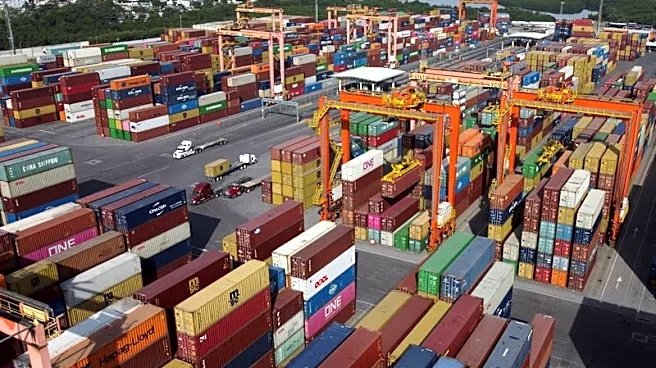
to embrace AI for evaluating sourcing decisions. This shift is driven by the need to understand the downstream impacts of business decisions, such as changes in supplier locations affecting inventory and logistics. The recent announcement by President Trump of a 50% tariff on certain Canadian goods and ongoing tariffs on Brazilian imports highlight the volatile trade environment. Kinaxis' Maestro platform allows manufacturers to simulate various scenarios, including alternative suppliers and transportation options, to make informed decisions quickly. This approach aims to enhance supply chain resilience by balancing cost, service, and flexibility.
Why It's Important?
The adoption of AI in supply chains is crucial as it offers a competitive edge in a rapidly changing global trade landscape. By enabling faster and more informed decision-making, companies can better manage disruptions and maintain profitability. The ability to model different scenarios helps businesses adapt to tariff changes and geopolitical uncertainties, which are increasingly common. This shift towards AI-driven supply chain management reflects a broader trend of prioritizing resilience over mere efficiency. Industries with complex supply chains, such as life sciences and electronics, stand to benefit significantly from these advancements, potentially leading to lower costs and improved customer service.
What's Next?
As AI continues to integrate into supply chain management, companies are expected to see further improvements in efficiency and resilience. The focus will likely shift towards automating routine planning activities, allowing human planners to concentrate on strategic decision-making and risk management. The ongoing geopolitical tensions and tariff uncertainties will keep driving the demand for AI solutions that can provide real-time insights and adaptability. Businesses that successfully leverage these technologies may gain a significant advantage in the global market.