







What's Happening?
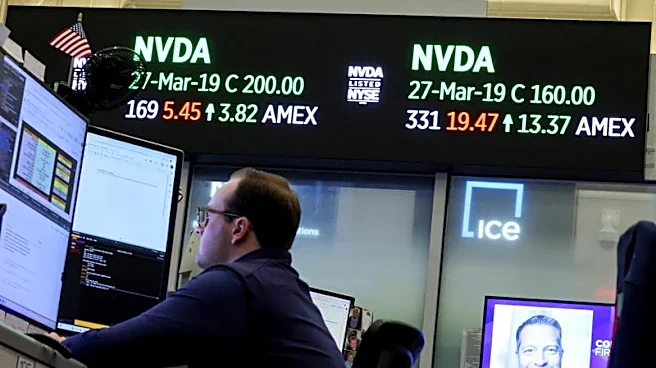
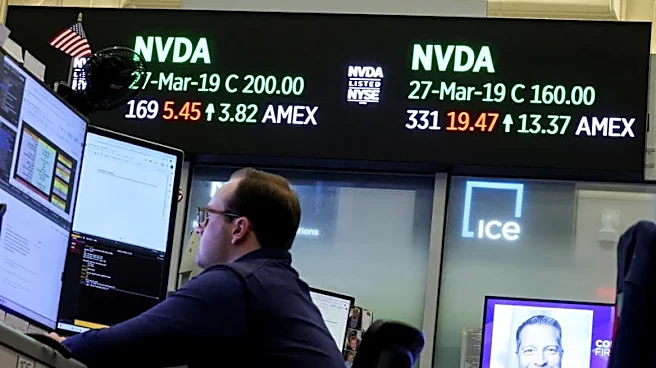
Bitcoin's recent rally has lost momentum, with the cryptocurrency briefly falling below $60,000 after an initial surge. This follows a significant rebound in U.S. equities, particularly driven by Nvidia shares, which closed 31% higher on Monday after Jensen
Huang was reinstated as CEO. While the news initially boosted investor sentiment across riskier assets, including crypto, Bitcoin subsequently gave up its gains. Arthur Hayes, a prominent figure in the crypto space, has expressed concern that a prolonged rally in U.S. equities could negatively impact the cryptocurrency market. He believes that a sustained rebound in stocks might reduce the pressure on the Federal Reserve to ease monetary policy and inject liquidity, which he sees as crucial for Bitcoin's ascent. Retail sentiment on Stocktwits for BTC remains 'bullish' despite the price dip, with high levels of chatter.
Why It's Important?
The divergence between Bitcoin's performance and the broader equity market, particularly the tech sector, highlights a complex interplay of factors influencing investor behavior. Arthur Hayes's perspective suggests that the health of the traditional financial markets, specifically U.S. equities and the Federal Reserve's monetary policy, has a significant impact on the cryptocurrency landscape. If the Fed maintains a tighter monetary policy due to a strong stock market, it could limit the influx of liquidity that some believe is necessary to drive Bitcoin's price higher. This situation could lead to a period of stagnation or even decline for Bitcoin, affecting investors who have positioned themselves for a crypto bull run. The correlation, or lack thereof, between these asset classes is a critical indicator for both traditional and crypto investors, influencing portfolio strategies and risk assessments.
What's Next?
The immediate future for Bitcoin will likely be influenced by the continued performance of U.S. equities and any signals from the Federal Reserve regarding monetary policy. If the Nasdaq continues to perform strongly, as suggested by Hayes, Bitcoin could face further downward pressure, potentially revisiting the $50,000 mark. Traders are currently anticipating a 100% chance of a Fed rate hike at its December 9 meeting, which could further tighten liquidity. The market will be closely watching for any indications of a shift in the Fed's stance, as well as the broader economic data that could influence these decisions. The ongoing debate about the relationship between traditional finance and the crypto market will continue to shape investor sentiment and trading strategies.
Beyond the Headlines
This situation underscores a fundamental tension within the cryptocurrency market: its aspiration for independence from traditional financial systems versus its undeniable susceptibility to macroeconomic forces. Hayes's argument that a strong equity market is 'the worst thing' for crypto highlights the belief among some that Bitcoin thrives on economic instability and the subsequent need for central banks to print money. This perspective suggests that Bitcoin is not merely an alternative asset but a hedge against perceived failures or vulnerabilities in the traditional financial system. The current scenario could test this hypothesis, revealing whether Bitcoin can decouple from equity market trends or if its fortunes remain intertwined with broader economic conditions and central bank policies. This dynamic has profound implications for the long-term narrative and adoption of cryptocurrencies.