




What's Happening?
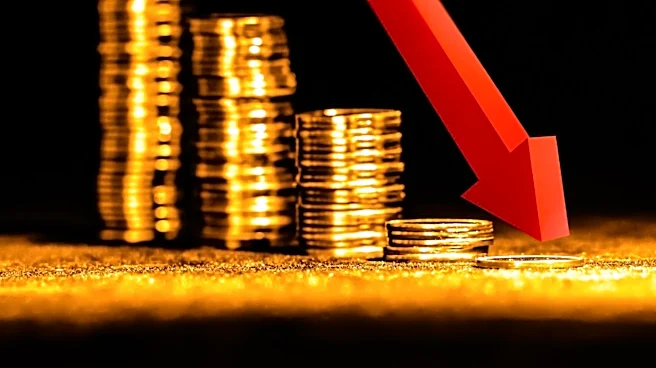
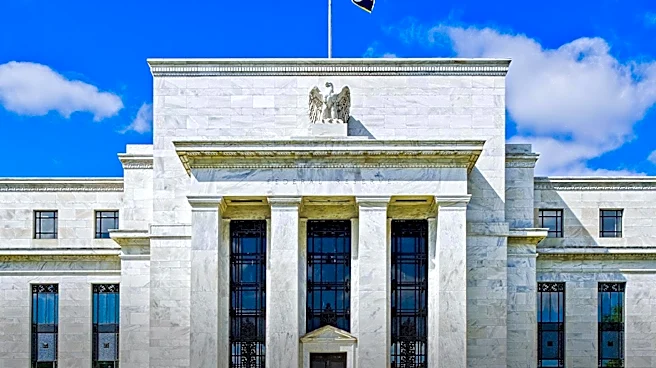
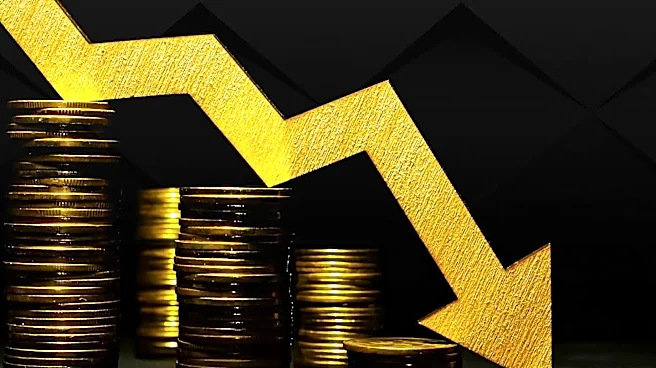
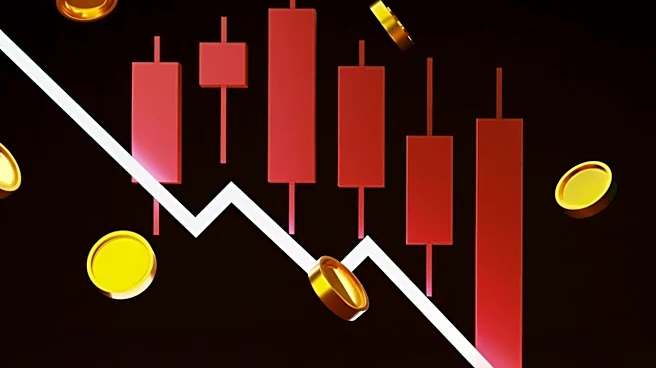
Gold prices are experiencing their worst weekly decline in eight months, falling 9.2% to approximately $3,525.25 an ounce, after reaching a record high of $5,515 an ounce in January. This downturn is attributed to a combination of factors, including a hawkish
Federal Reserve, expectations of further interest rate increases, and a stronger U.S. dollar. According to Chris Weston, head of research at Pepperstone, gold is facing a "perfect storm of macro headwinds and forced liquidation." The sell-off is intensified as investors liquidate assets, including gold, to meet margin calls amidst a broad decline in global equities, particularly technology stocks linked to the artificial intelligence trade. Options markets also indicate a shift in sentiment, with the premium for call options shrinking relative to puts, suggesting growing bearish positioning.
Why It's Important?
The decline in gold prices reflects a significant shift in investor behavior and market dynamics within the U.S. and globally. A stronger U.S. dollar and rising Treasury yields, driven by the Federal Reserve's hawkish stance, make non-interest-bearing assets like gold less attractive. This situation impacts investors who traditionally view gold as a safe-haven asset, as its role is currently being overshadowed by the need for liquidity during market stress. The forced liquidation across global equities, especially in the AI sector, indicates broader market instability and a scramble for cash, affecting various asset classes. This trend could lead to further volatility and repricing across financial markets, influencing investment strategies and capital allocation.
What's Next?
Analysts warn that gold prices could fall further before finding a floor, with the immediate focus on whether buyers can defend the psychologically important $3,500 level. A sustained break below this point could expose the metal to further losses towards the $3,400 to $3,300 region, where longer-term investors and physical buyers might show increased interest. Trend-following funds have already increased their short positions in gold, and exchange-traded fund investors have yet to capitulate, suggesting potential for more selling. Investors are advised to wait for selling pressure to ease, volatility to moderate, and ideally, a reversal in the dollar and U.S. real yields before concluding that gold has established a sustainable low. Next week's U.S. economic data will likely play a crucial role in determining gold's immediate trajectory.
Beyond the Headlines
The current gold market dynamics highlight a complex interplay between monetary policy, technological advancements, and investor psychology. The Federal Reserve's commitment to tightening policy to combat inflation is a primary driver, demonstrating the significant influence of central bank actions on global asset prices. The "AI trade" jitters and subsequent forced liquidation underscore the interconnectedness of modern financial markets, where a downturn in one high-growth sector can trigger ripple effects across seemingly unrelated assets. This scenario challenges the traditional perception of gold as an ultimate safe haven, suggesting that in periods of acute market stress, liquidity needs can override conventional risk-off strategies. The shift in options market sentiment further indicates a fundamental change in how investors are hedging against future market movements.