





What's Happening?
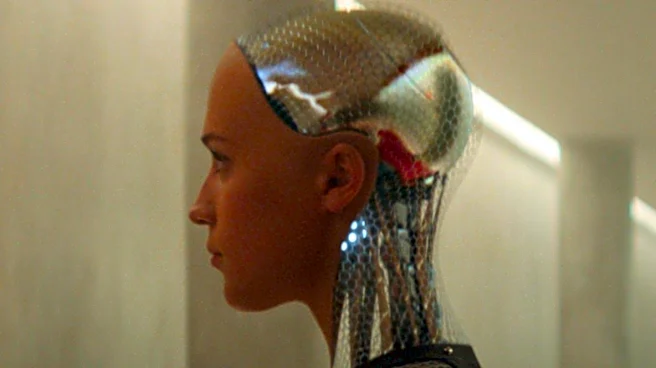
An AI-generated short documentary titled 'Guardians of the Burrow' has won a prize at the Omni international AI film festival. Created by Australian digital content designer Jodie Heenan, the film depicts the relationship between an Amazonian tarantula
and a humming frog, entirely through AI technology. The documentary, which openly discloses its AI origins, has sparked debate over the use of AI in creative fields. Critics argue that AI tools are often trained on copyrighted content without proper compensation to original creators. Despite the controversy, Heenan defends the use of AI as a creative tool, allowing filmmakers to depict scenarios that are otherwise impossible to capture in the wild. The film is part of a broader trend where AI is being used to create digital likenesses and synthesised voices, as seen in a project to reconstruct Orson Welles' 'The Magnificent Ambersons'.
Why It's Important?
The use of AI in filmmaking represents a significant shift in the creative industry, challenging traditional methods and raising questions about copyright and fair compensation. As AI technology becomes more prevalent, it could democratize filmmaking by lowering production costs and allowing more creators to tell their stories. However, this also poses a threat to traditional jobs in the industry, as AI could replace roles previously filled by humans. The debate over AI's role in creativity highlights the need for new policies to protect original creators' rights while embracing technological advancements. The controversy underscores the tension between innovation and the preservation of artistic integrity, as AI-generated content becomes more mainstream.
What's Next?
The ongoing debate over AI in creative industries is likely to intensify as more projects utilize this technology. Stakeholders, including governments and industry leaders, may need to establish guidelines to ensure fair compensation for original creators whose work is used to train AI models. As AI continues to evolve, the industry may see new roles and opportunities emerge, similar to the transition seen with the advent of CGI in filmmaking. The future of AI in the arts will depend on balancing innovation with ethical considerations, potentially leading to new collaborations between technology and traditional creative processes.
Beyond the Headlines
The rise of AI in filmmaking could lead to a cultural shift in how stories are told and consumed. By making filmmaking more accessible, AI has the potential to diversify the types of stories that reach audiences, breaking down barriers that have historically limited who can participate in the industry. This democratization could lead to a richer tapestry of narratives, reflecting a broader range of experiences and perspectives. However, it also raises ethical questions about the authenticity of AI-generated content and the value of human creativity in an increasingly automated world.