







What's Happening?
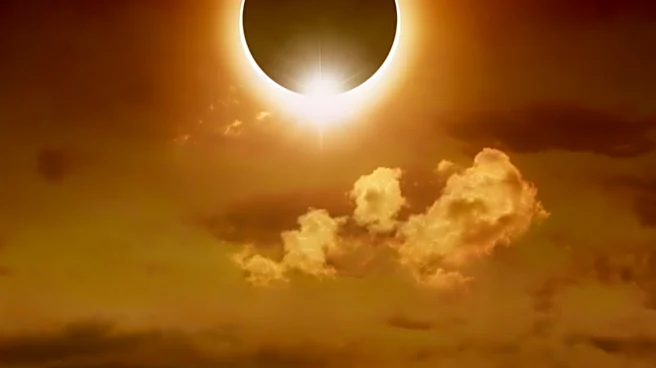
Throughout history, many ancient cultures interpreted solar eclipses as ominous events, often believing that celestial creatures were devouring the Sun. In China, eclipses were attributed to a dragon, while in India, the demon-serpent Rahu was thought
to be responsible. Norse mythology involved wolves chasing the Sun, and the Incas saw eclipses as a sign of divine wrath. These interpretations reflect humanity's attempt to explain natural phenomena before the advent of scientific understanding.
Why It's Important?
The historical interpretations of solar eclipses highlight the evolution of human understanding of natural events. These myths and legends reveal how ancient societies sought to make sense of the world around them, often attributing supernatural causes to unexplained phenomena. The transition from mythological explanations to scientific understanding marks a significant shift in human knowledge, illustrating the development of astronomy and the scientific method. This historical perspective enriches our appreciation of cultural diversity and the progression of scientific thought.
Beyond the Headlines
The study of ancient eclipse myths offers insights into the cultural and psychological aspects of human societies. These stories reflect the fears and beliefs of ancient peoples, providing a window into their worldviews and values. The persistence of such myths in cultural memory underscores the enduring impact of natural events on human consciousness. Understanding these historical narratives can inform contemporary discussions on science communication and the role of cultural heritage in shaping modern perspectives.