







What's Happening?
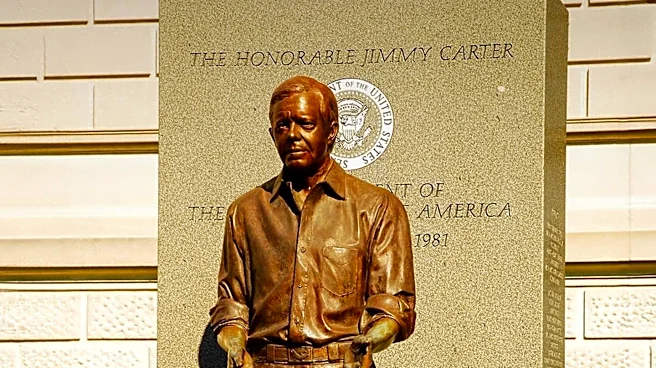
Pedro Trapote, the owner of the renowned Chocolatería San Ginés in Madrid, recounted his extensive career, which included encounters with various heads of state and celebrities. Among these notable figures, he mentioned meeting President Jimmy Carter,
Gina Lollobrigida, Mario Vargas Llosa, and Dr. Christiaan Barnard. Trapote, now 86, continues to be actively involved in his businesses, emphasizing his passion for work and expansion. His entrepreneurial journey began with a small leather crafts shop in Sitges, where he recognized the potential of tourism. This led him to open Joy Eslava, a prominent Madrid nightclub, after being inspired by New York's Studio 54 in the late 1970s.
Why It's Important?
Trapote's recollection of meeting President Jimmy Carter, alongside other global figures, highlights the international reach and cultural significance of his establishments, particularly Joy Eslava, which became a social hub in Madrid. For a U.S. President to visit such a venue underscores the cultural exchange and diplomatic interactions that extend beyond formal state visits. It also reflects the broader influence of American culture, as Trapote himself was inspired by Studio 54 in New York to create his own successful venture. This cross-cultural inspiration and interaction contribute to the global interconnectedness of business and entertainment, demonstrating how U.S. figures and trends can leave a lasting impression internationally.
What's Next?
While the specific meeting with President Carter is a historical anecdote, Trapote's continued entrepreneurial drive, even at 86, suggests an ongoing impact on the business landscape. His expansion of Chocolatería San Ginés to U.S. cities like Austin, Texas, and Miami indicates a direct and current influence on the American market. This expansion not only introduces a piece of Spanish culinary culture to the U.S. but also creates jobs and fosters economic ties. His family's involvement in these international ventures ensures the continuation of his business philosophy and legacy, potentially leading to further growth and cultural integration in the U.S. and beyond.
Beyond the Headlines
Trapote's story, including his encounter with President Carter, subtly illustrates the power of cultural soft diplomacy. When a U.S. President engages with a local business owner or cultural institution abroad, it can foster goodwill and strengthen international relationships at a grassroots level. Beyond the political implications, Trapote's personal discipline—avoiding alcohol and drugs while running a nightclub—offers a unique perspective on leadership and responsibility in the entertainment industry. This ethical stance, combined with his business acumen, suggests a deeper commitment to community and family values, which he believes contributed to his long-term success and the positive environment of his establishments, even when frequented by global dignitaries.