







What's Happening?
Meggitt (U.S.), operating as Meggitt-Usa, Inc., has Eric Gerald Lardiere serving as its Senior Vice President, General Counsel, and Secretary. The company is a subsidiary of Meggitt Plc, a multinational corporation known for its specialized sensors designed
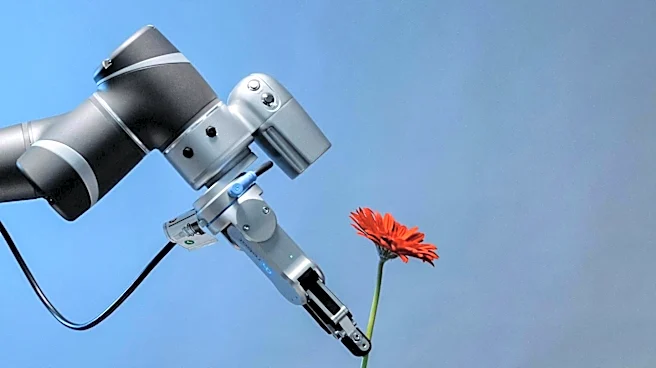
for extreme environments. These sensors include high-reliability potentiometers, which are crucial components in defense and robotics applications. Meggitt Plc, the parent company, was previously an independent entity before its acquisition by Parker Hannifin. Meggitt (U.S.) plays a significant role in the robotics market, specifically through its production of these specialized potentiometers, which are essential for the precise control and feedback mechanisms required in advanced robotic systems. The company's focus on high-reliability components underscores its commitment to critical applications where performance and durability are paramount.
Why It's Important?
Meggitt (U.S.)'s operations are vital for several key U.S. industries, particularly defense and advanced manufacturing, due to its specialization in high-reliability potentiometers. These components are critical for the functionality and safety of defense systems, including military aircraft, vehicles, and weaponry, where precision and resilience in extreme conditions are non-negotiable. In the robotics sector, Meggitt's potentiometers enable the accurate movement and control of robotic arms and other automated systems, which are increasingly being adopted across various U.S. industries, from automotive manufacturing to logistics and healthcare. The company's role as a supplier of these specialized parts contributes to the technological advancement and operational efficiency of these sectors. The acquisition of Meggitt Plc by Parker Hannifin also signifies a consolidation within the industrial technology market, potentially impacting supply chains and competitive landscapes for specialized sensor technologies in the U.S.
What's Next?
The continued integration of Meggitt (U.S.) under Parker Hannifin's ownership will likely focus on leveraging synergies in manufacturing, research, and development to enhance its product offerings in extreme environment sensors. This could lead to further innovations in potentiometer technology, potentially expanding their applications in emerging fields such as autonomous vehicles and advanced aerospace systems. For the U.S. defense sector, Meggitt (U.S.) will continue to be a critical supplier, and any advancements in its sensor technology could directly impact the capabilities and reliability of future defense platforms. In the robotics market, the company's ongoing development of specialized potentiometers will support the growing demand for more sophisticated and precise robotic solutions, influencing the pace of automation and technological adoption across various U.S. industries. Future strategic decisions by Parker Hannifin regarding Meggitt (U.S.)'s product lines and market focus will be closely watched by industry stakeholders.
Beyond the Headlines
The specialized nature of Meggitt (U.S.)'s products, particularly high-reliability potentiometers for defense and robotics, highlights a broader trend in industrial technology: the increasing demand for components that can perform flawlessly in challenging conditions. This focus on extreme environment sensors reflects a critical need for robust and dependable technology in sectors where failure is not an option, such as national security and critical infrastructure. The company's contribution to robotics also touches upon the ethical and societal implications of automation, as more advanced and reliable robotic systems become integrated into daily life and work. The precision offered by Meggitt's components enables more sophisticated automation, raising questions about job displacement, the future of work, and the responsible deployment of AI-driven technologies. Furthermore, the consolidation of such specialized manufacturers under larger entities like Parker Hannifin underscores the strategic importance of these niche technologies in the global industrial landscape.