






What's Happening?
Digital twins are transforming drug development by creating virtual representations of real-world systems, such as molecules, biological processes, patients, clinical trials, and manufacturing systems. These virtual models are continuously informed by data,
allowing researchers to simulate scenarios, identify patterns, and predict outcomes more efficiently. The goal is not to replace physical experiments or clinical research entirely but to make them more targeted and informative. By combining digital twins with artificial intelligence (AI), computational biology, and real-world evidence, pharmaceutical companies can create a continuous feedback loop between virtual modeling and physical experimentation, leading to better decision-making, more targeted research, and improved clinical development processes.
Why It's Important?
The integration of digital twins into drug development holds immense importance for the U.S. pharmaceutical industry and global healthcare. Drug development is a lengthy, costly, and high-risk process, with many candidates failing due to efficacy, safety, or manufacturing issues. Digital twins can significantly mitigate these risks by allowing virtual testing and optimization before committing substantial resources to physical experiments. This can accelerate the discovery of promising drug candidates, streamline clinical trial design, and improve manufacturing efficiency, ultimately bringing life-saving medications to patients faster and at potentially lower costs. For stakeholders, this means a more predictable and efficient R&D pipeline, reduced financial risk, and a competitive edge in a rapidly evolving market. The technology also supports the move towards precision medicine by enabling more personalized treatment strategies.
What's Next?
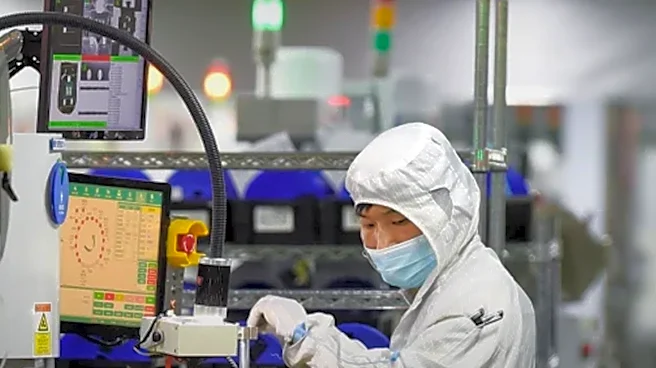
The future of digital twins in drug development will involve deeper integration with AI and real-world data to create increasingly sophisticated and autonomous systems. Researchers will continue to refine patient-level digital twins, aiming to combine genomic information, clinical history, and physiological measurements to predict individual responses to interventions. In manufacturing, digital twins will be used for real-time monitoring, predictive analytics, and process optimization to ensure product quality and efficiency. Regulatory bodies will play a crucial role in establishing validation methodologies and guidelines for the use of digital twins as evidence-generating tools. Pharmaceutical companies are encouraged to invest in interoperable data infrastructure and build capabilities that combine AI with simulation, starting with clearly defined use cases to demonstrate measurable value.
Beyond the Headlines
The widespread adoption of digital twins in drug development signifies a fundamental shift towards a more data-driven and predictive scientific paradigm. This technology has the potential to democratize access to advanced research capabilities, allowing smaller biotech firms to compete more effectively. However, it also raises critical ethical and practical considerations, such as data privacy, the potential for algorithmic bias in patient models, and the need for robust validation to ensure the reliability of virtual simulations. The long-term vision is a hybrid development model where virtual and physical experimentation work in concert, creating a continuous learning system across the entire drug development lifecycle. This could lead to a future where drug discovery is not just faster and cheaper, but also more precise and personalized, ultimately transforming how diseases are treated and prevented.