




What's Happening?
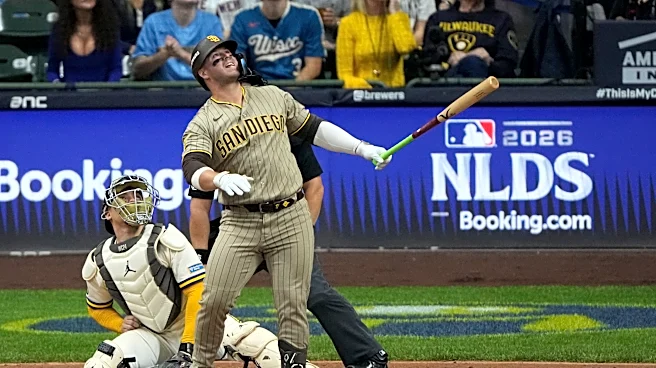
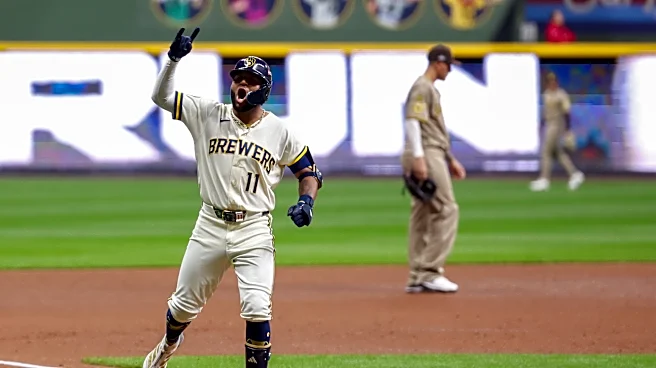
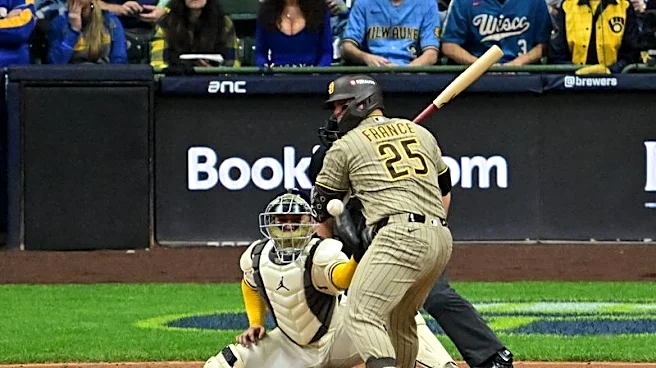
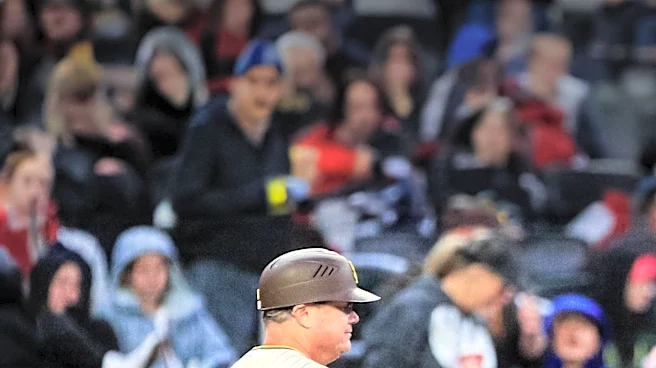
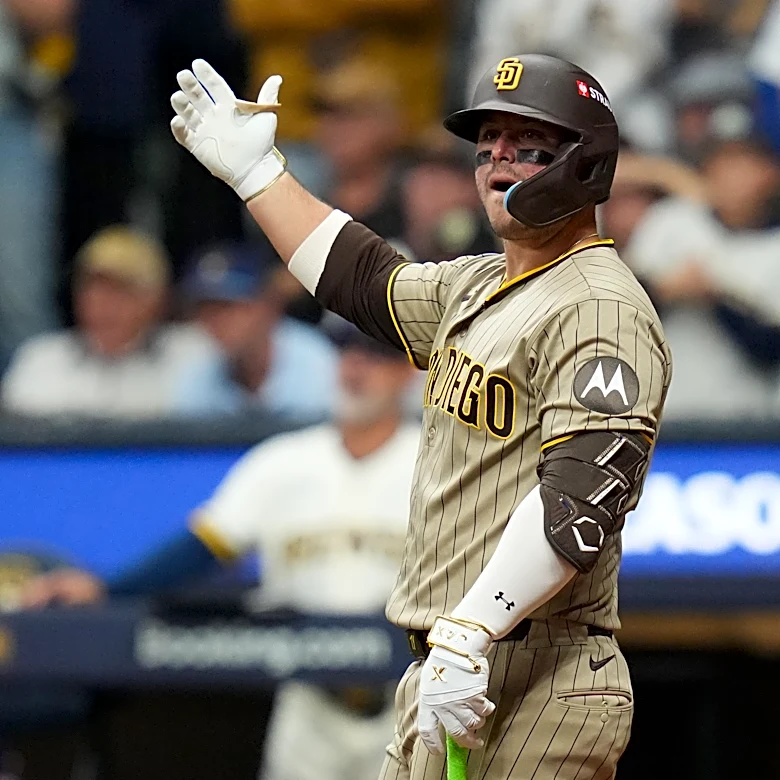
In a National League Division Series Game 1, San Diego Padres manager Mike Shildt disputed a critical ruling after a potential game-changing hit by Ty France was deemed an out. In the top of the ninth inning, with the Padres trailing the Milwaukee Brewers
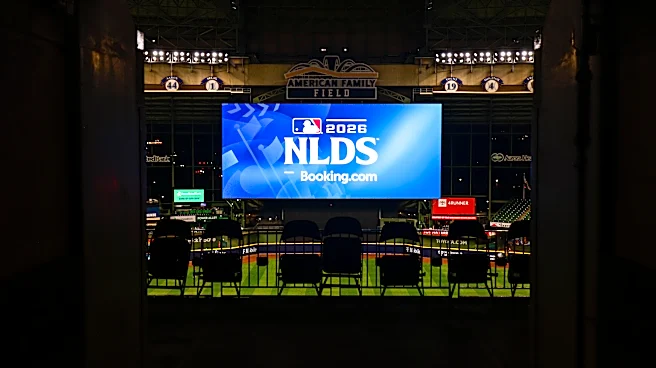
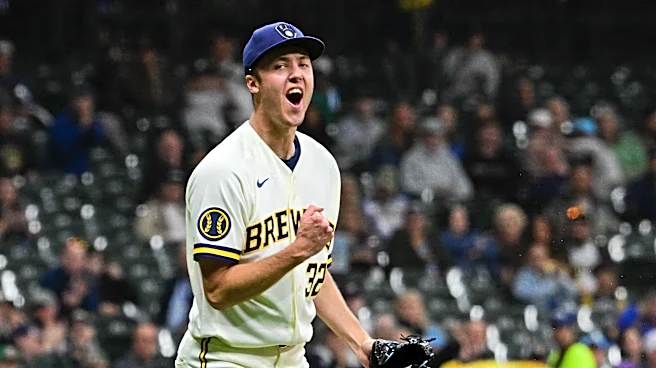
3-2, France hit a ball that appeared to be a two-run go-ahead double. However, the ball struck the retractable roof structure of American Family Field in foul territory before being caught by Brewers outfielder Jackson Chourio. Following a review, umpires upheld the call of an out, citing the stadium's ground rules. These rules state that if a ball hits the roof in fair territory, it remains in play, but if it hits the roof in foul territory, it is a dead ball and an out if caught. The decision effectively ended the Padres' rally, leading to their 3-2 loss. The incident sparked immediate debate among fans and sports analysts, with many questioning the impact of unique stadium rules on crucial playoff outcomes.
Why It's Important?
This incident highlights the significant impact of specific stadium ground rules on the outcome of high-stakes baseball games, particularly in the MLB playoffs. The controversial ruling directly influenced the Padres' ability to potentially win or tie the game, demonstrating how a seemingly minor detail in stadium design and its corresponding rules can alter the course of a series. For the Padres, the loss of a potential two-run hit in the ninth inning was a critical blow, putting them at a disadvantage early in the Division Series. For the Brewers, the ground rule played a pivotal role in securing a narrow victory. The event also brings into focus the fairness and consistency of ground rules across different ballparks, raising questions about how such unique circumstances should be handled in professional baseball to ensure equitable competition. The immediate and widespread media reaction underscores the emotional and competitive weight of such decisions in professional sports.
What's Next?
The Padres will need to quickly regroup from this disheartening loss as they continue their Division Series against the Brewers. The controversial call is likely to be a major talking point leading into the next game, potentially fueling the Padres' motivation or adding pressure. Discussions about the fairness and clarity of stadium ground rules, especially in playoff scenarios, are expected to continue among MLB officials, team managers, and sports commentators. While the ruling for this specific play is final, the incident could prompt future reviews or clarifications of ground rules in stadiums with unique architectural features, particularly retractable roofs. Fans and media will closely watch how both teams respond in subsequent games, with the Padres aiming to overcome the psychological impact of the Game 1 decision.
Beyond the Headlines
The incident transcends a simple baseball play, touching upon broader themes of sportsmanship, the role of technology in officiating, and the inherent challenges of standardizing rules across diverse playing environments. The immediate and passionate reactions from fans and media, including comments from journalists like Tim Kelly and Bob Nightingale, underscore the emotional investment in sports and the desire for clear, unambiguous rules. The debate over whether the roof should have been open, as suggested by Kelly, points to a larger discussion about optimizing playing conditions versus maintaining stadium-specific traditions. This event could contribute to a growing conversation within MLB about the need for greater uniformity in ground rules or the implementation of technology that could more precisely determine the trajectory and impact point of a ball, minimizing human error and subjective interpretation in critical moments.