





What's Happening?
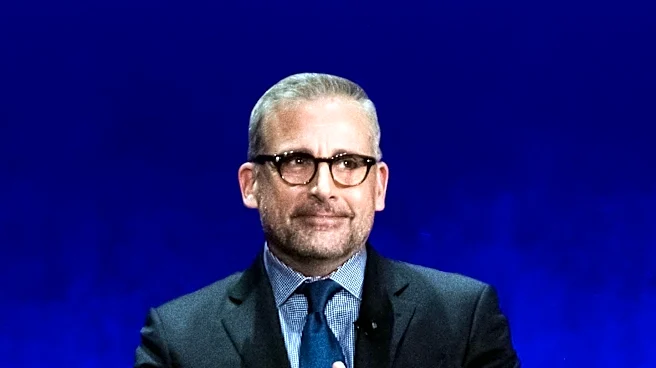
The popular NBC comedy series 'The Office' experienced a significant shift in its trajectory following the departure of its lead actor, Steve Carell, in Season 7. Carell, who portrayed regional manager Michael Scott, left the show to pursue other projects
after spending a considerable amount of time in the role. His character's exit involved Michael Scott moving to Colorado with Holly Flax, the human resources representative with whom he falls in love. While the series continued for two more seasons, many viewers and critics point to Carell's departure as the moment the show lost its original footing. Subsequent attempts to replace Michael Scott with new managers, including characters played by Will Ferrell, James Spader, Catherine Tate, and Ed Helms, did not fully recapture the dynamic that Carell brought to the series.
Why It's Important?
Steve Carell's departure from 'The Office' highlights the critical role a lead actor can play in the success and longevity of a television series. His portrayal of Michael Scott was central to the show's comedic tone and emotional core, making his absence profoundly felt. The subsequent seasons struggled to maintain the same level of critical acclaim and audience engagement, demonstrating that even a strong ensemble cast and established premise can falter without a key foundational element. This situation underscores the challenges faced by long-running shows when pivotal cast members decide to move on, often leading to creative shifts that can alienate loyal viewers or alter the show's original appeal. The impact on 'The Office' serves as a case study in television production regarding cast changes and their influence on narrative and audience perception.
What's Next?
While 'The Office' concluded its run in 2013, the discussion surrounding Steve Carell's departure and its impact continues among fans and critics. The show remains popular in syndication and on streaming platforms, allowing new generations of viewers to engage with its evolution. The legacy of Carell's performance and the subsequent seasons without him continue to be debated, influencing how future television productions approach character development and cast stability. For actors in long-running series, the decision to leave often involves weighing personal career aspirations against the potential impact on a successful show. The trajectory of 'The Office' post-Carell serves as a cautionary tale and a point of reference for creators considering major cast changes in established franchises.
Beyond the Headlines
The narrative surrounding Steve Carell's exit from 'The Office' delves into deeper implications about the nature of creative ownership and the evolution of artistic works. While Carell's desire to move on was understandable, his departure inadvertently sparked a conversation about whether a show should continue without its central figure. This raises questions about the balance between a creator's vision, an actor's contribution, and audience expectations. The show's struggle to find a suitable replacement for Michael Scott also highlights the unique and often irreplaceable chemistry that certain actors bring to their roles, shaping the very identity of a series. This scenario reflects broader industry challenges in sustaining creative momentum and audience loyalty over extended periods, especially when key talent transitions out.