


What's Happening?
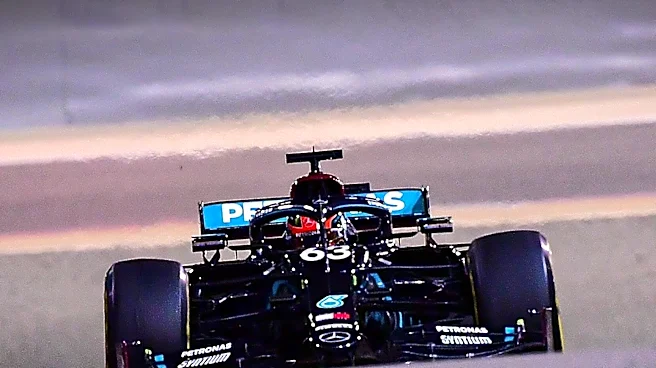
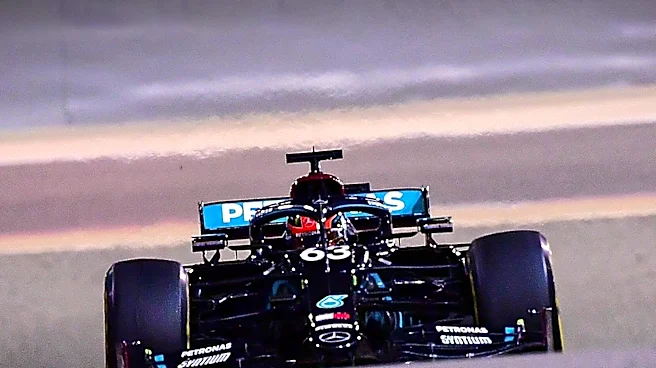
Formula 1 driver George Russell has opted against using Mercedes' updated engine for the Las Vegas Grand Prix. This decision was made to avoid a grid penalty, as Russell has already used his allocation of four turbochargers for the season due to previous
technical issues. Installing a new turbocharger would result in a five-place grid penalty. While other Mercedes-powered drivers, including Kimi Antonelli, are taking the upgrade, Russell believes the performance benefit is not substantial enough to warrant a penalty at a track where he expects to be competitive. He stated that the upgrade offers less than a tenth of a second improvement and primarily enhances the driving feel rather than providing a significant performance boost. Russell won from pole position at the Las Vegas Strip Circuit in 2024 and finished second there 12 months prior, indicating his confidence in his performance at this specific venue.
Why It's Important?
This decision highlights the strategic considerations drivers and teams face in Formula 1 regarding engine component usage and grid penalties. For Russell, prioritizing track position and a strong starting grid in Las Vegas, a circuit where he has historically performed well, outweighs the marginal performance gain from the engine upgrade. This choice could impact his standing in the Drivers' Championship, especially as he aims to bridge a 17-point gap to Max Verstappen for second place. The situation also underscores the FIA's Additional Development and Upgrade Opportunities (ADUO) system, which allows for limited power unit upgrades, and how teams strategically deploy these. The fact that Mercedes introduced this upgrade late in the season, after securing both titles, suggests a focus on future development rather than immediate championship impact for their lead drivers.
What's Next?
The immediate consequence will be observed during the Las Vegas Grand Prix, where Russell will compete without the latest engine upgrade. His performance relative to other Mercedes-powered cars that have taken the upgrade, and his main competitors, will be closely watched. The outcome of this race could influence future strategic decisions regarding engine component management and penalty avoidance in subsequent seasons. Mercedes will likely analyze the performance data from both Russell's car and Antonelli's car (which has the upgrade) to assess the real-world impact of the new turbocharger. This data will be crucial for their development plans for the next season. Additionally, the incident with Antonelli incurring a 10-place grid drop for a sixth internal combustion engine indicates ongoing challenges with power unit reliability and the strict regulations governing component usage.
Beyond the Headlines
Russell's decision reflects a deeper philosophical approach to racing where driver confidence and track familiarity can sometimes be prioritized over marginal technological advancements, especially when penalties are involved. It also brings into focus the delicate balance between pushing technological boundaries and adhering to regulatory constraints in a highly competitive sport like Formula 1. The 'less than a tenth' performance gain mentioned by Russell, while seemingly small, can be significant in F1, where races are often decided by milliseconds. His choice suggests a belief that his driving skill and the car's overall setup, combined with his past success at the track, will compensate for the lack of the latest upgrade. This scenario could spark discussions within the sport about the fairness and impact of grid penalties for engine component changes, particularly when upgrades are introduced late in the season.