





What's Happening?
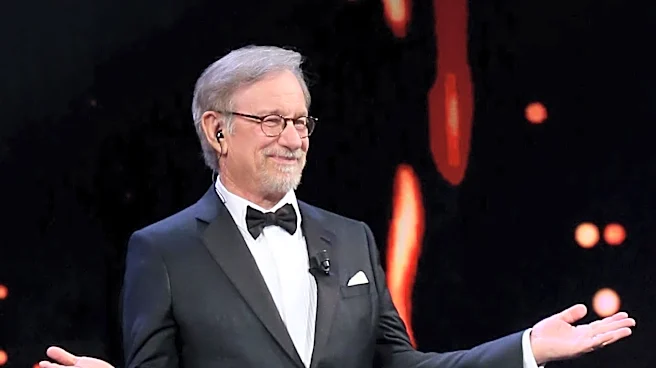
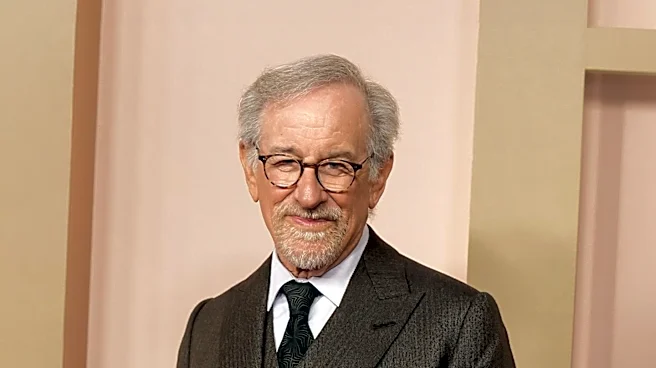
Steven Spielberg's 1993 film adaptation of Michael Crichton's novel 'Jurassic Park' has been a significant cultural phenomenon, often interpreted as a cautionary tale about the consequences of unchecked scientific progress. Despite its success, the film and
its source material have faced criticism for allegedly promoting an anti-science narrative. Michael Crichton, the author of the original novel, addressed these criticisms by emphasizing that his work was not intended to be anti-science. Instead, he argued that the story's impact has been largely positive, sparking interest in paleontology and leading to what some call the 'golden age of dinosaurs.' Crichton highlighted that many natural history museums in the U.S. have embraced the 'Jurassic Park' theme to engage the public's interest in science.
Why It's Important?
The discussion around 'Jurassic Park' highlights the complex relationship between science fiction and public perception of science. While the film has been criticized for its portrayal of scientific endeavors, it has also played a crucial role in popularizing paleontology and encouraging scientific curiosity among the public. This dual impact underscores the power of media to shape societal attitudes towards science and technology. The film's success in inspiring a new generation of scientists demonstrates the potential for entertainment to contribute positively to scientific engagement, despite initial criticisms.