



What's Happening?
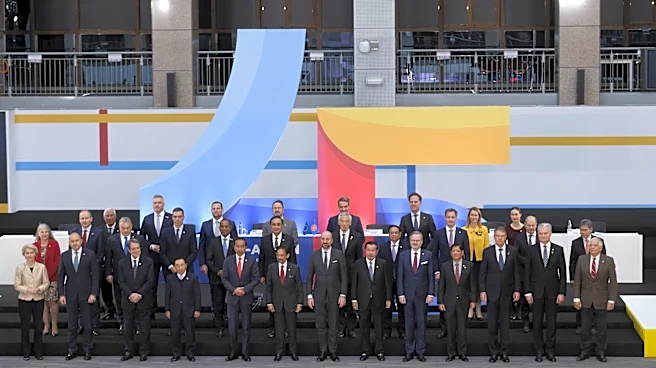
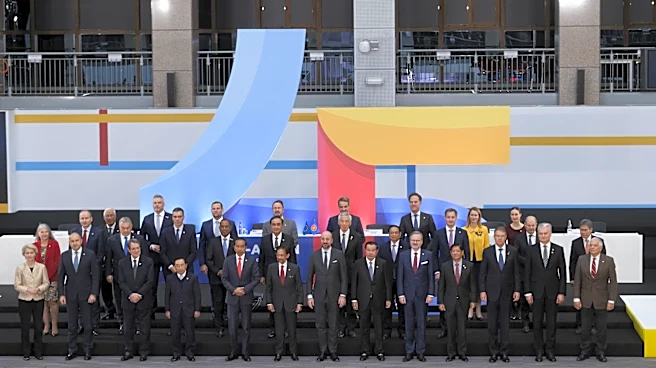
The European Union and the Association of Southeast Asian Nations (ASEAN) are working towards deeper trade ties, with 2027 anticipated to be a landmark year marking 50 years of diplomatic relations. A trade agreement with Indonesia is expected to take
effect, a deal with the Philippines is nearing completion, and negotiations with Thailand and Malaysia are progressing. By the end of 2027, the EU could have trade deals with six Southeast Asian states, up from two currently. Despite these advancements, significant hurdles remain, particularly informal trade barriers such as customs delays, complex regulations, and a lack of practical guidance for European businesses entering unfamiliar Southeast Asian markets. The EU's trade policy is also acquiring a geopolitical purpose, aiming to reduce strategic dependencies on a few suppliers for critical minerals needed for clean technologies, while Southeast Asian producers seek foreign investment to develop domestic processing industries.
Why It's Important?
The deepening trade ties between the EU and ASEAN are crucial for both blocs. For the EU, it represents a strategic effort to diversify supply chains, reduce reliance on specific suppliers for critical raw materials, and enhance economic security. This is particularly relevant in the context of global competition and the need for minerals essential for batteries and other clean technologies. For ASEAN nations, these agreements can attract European investment in processing facilities, promote environmental standards, and provide greater regulatory certainty, fostering economic growth and industrial development. The challenges posed by informal trade barriers highlight the need for comprehensive support mechanisms for businesses, especially small and medium-sized enterprises, to fully leverage the benefits of these agreements. The geopolitical dimension of trade policy underscores the evolving nature of international relations, where economic partnerships are increasingly intertwined with strategic objectives.
What's Next?
The immediate focus for the EU will be on finalizing and ratifying the pending trade and investment protection agreements with ASEAN member states, particularly with Singapore and Vietnam. Efforts will also be directed towards addressing informal trade barriers by expanding assistance from European chambers of commerce and trade delegations, providing practical guidance on local business practices. A larger question remains whether the EU will continue pursuing bilateral deals or revive its ambition for a region-to-region agreement with ASEAN, which was suspended in 2009. The 2027 anniversary could serve as a deadline for agreeing on future steps, potentially including negotiations for a region-to-region Digital Trade Agreement and Investment Protection Agreement, using the EU-Singapore Digital Trade Agreement as a model. However, there is a risk that diplomatic ceremonies might not translate into substantive progress without sustained effort.
Beyond the Headlines
The EU's pursuit of deeper trade ties with ASEAN reflects a broader global trend of economic blocs seeking to strengthen their positions in a multipolar world. The tension between reducing strategic dependencies and fostering open trade highlights the complex balancing act required in modern trade policy. The EU's experience with Indonesia over nickel exports, where Jakarta seeks to develop domestic processing industries rather than merely export raw materials, illustrates the evolving dynamics of resource trade and the increasing demand for value-added production within resource-rich nations. This shift could lead to more equitable partnerships but also potential conflicts over resource control and industrial development strategies.