





What's Happening?
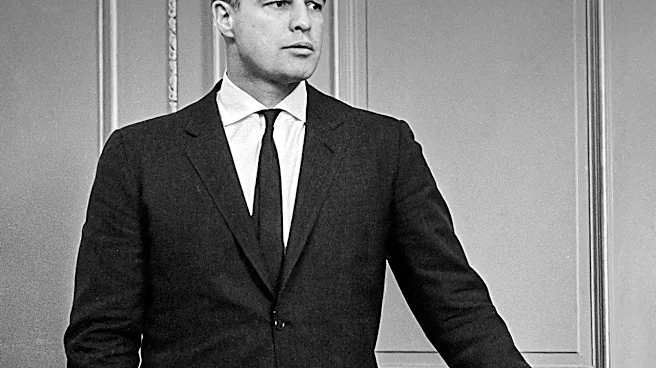
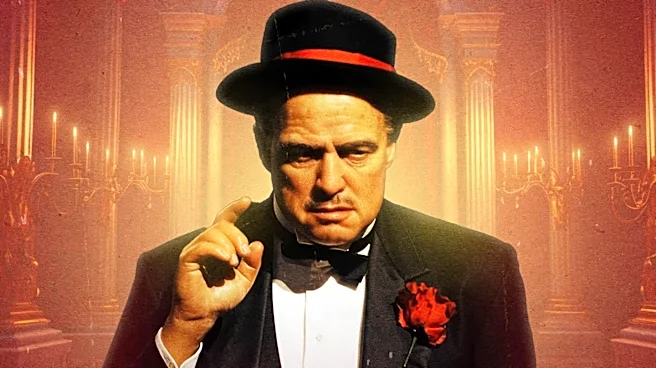
Francis Ford Coppola's iconic film, 'The Godfather Part II,' saw the notable absence of Marlon Brando, who was originally slated to reprise his role as Vito Corleone in a cameo. The film, which explores the rise of Vito and the decline of his son Michael's
family, was conceived by Mario Puzo to contrast these two narratives. Robert De Niro was cast to portray the young Vito, earning an Oscar for his performance. Brando had agreed to appear in a concluding sequence set on December 7, 1941, depicting the Corleone family's preparations for Vito's birthday. However, Brando did not show up for filming on the scheduled day. This absence was a deliberate protest against Paramount due to unresolved disputes regarding his treatment and compensation for the first 'Godfather' film. Coppola recounted that many actors were dissatisfied with their pay from the initial movie, which was made on a limited budget.
Why It's Important?
Marlon Brando's decision to not appear in 'The Godfather Part II' significantly impacted the film's narrative and production. His protest against Paramount highlighted ongoing tensions between actors and studios over compensation and contractual agreements, a recurring theme in Hollywood. The last-minute rewrite by Francis Ford Coppola, necessitated by Brando's absence, inadvertently strengthened the film's thematic core. The revised scene, where Michael Corleone announces his enlistment in the Marines and is left isolated as his family greets Vito, powerfully foreshadows Michael's eventual solitude and transformation into Don Corleone. This incident underscores how creative constraints, even those stemming from off-screen disputes, can sometimes lead to more profound artistic outcomes, shaping the legacy of a cinematic masterpiece and influencing future filmmaking approaches to character development and narrative depth.
What's Next?
While the event itself is historical, its implications continue to resonate within film studies and industry practices. The story of Brando's protest serves as a case study in actor-studio relations and the power dynamics within Hollywood. Future productions may draw lessons from this incident regarding contract negotiations and the potential for creative adaptation in the face of unforeseen challenges. The film's enduring critical acclaim, partly attributed to the impactful scene born from Brando's absence, ensures its continued study in film schools and by aspiring filmmakers. The narrative of Michael's isolation, amplified by the altered scene, remains a powerful element discussed in analyses of the film's psychological depth and character arcs.
Beyond the Headlines
The incident surrounding Marlon Brando's non-appearance in 'The Godfather Part II' delves into the complex interplay between artistic integrity, financial disputes, and the creative process in filmmaking. Brando's protest, rooted in his dissatisfaction with Paramount, reflects a broader historical struggle for fair compensation and recognition for artists in the entertainment industry. This event highlights how personal and professional conflicts can inadvertently shape cinematic history, leading to unexpected narrative choices that enhance a film's artistic merit. The resulting scene, which emphasizes Michael's isolation, transcends a mere plot point, becoming a symbolic representation of the character's tragic destiny and the corrosive nature of power. This demonstrates how real-world tensions can imbue fictional narratives with deeper meaning, offering a rich subject for cultural and ethical analysis of the film industry.