






What's Happening?
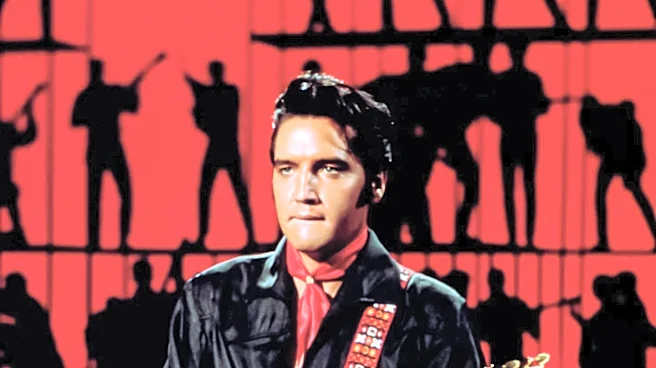
Authentic Brands Group, the licensing entity managing Elvis Presley's music and likeness, has filed a lawsuit against the AI company Anthropic. The lawsuit, reported by Billboard, alleges that Anthropic trained its AI models using 274 of Presley's songs
without obtaining proper permission. This legal action marks a significant instance where an artist's estate is directly suing an AI company over copyright infringement, following previous lawsuits from major record labels. The complaint states that Anthropic's AI, Claude, created 'unlicensed derivative works' by using Presley's copyrighted material. The lawsuit seeks $150,000 for each infringed track, totaling approximately $41 million.
Why It's Important?
This lawsuit is important as it highlights the escalating legal challenges faced by AI companies regarding intellectual property rights, particularly in the music industry. The outcome could set a precedent for how AI models are trained on copyrighted content and the responsibilities of AI developers to secure proper licensing. For the music industry, it underscores the growing concern among artists and their estates about the unauthorized use of their creative works in AI development. A favorable ruling for Presley's rightsholders could lead to a wave of similar lawsuits, potentially forcing AI companies to re-evaluate their data acquisition strategies and implement more robust licensing frameworks. This could significantly impact the cost and accessibility of training data for AI, potentially slowing down innovation or increasing the financial burden on AI developers.
What's Next?
The lawsuit, ABE EPE LLC v. Anthropic, will proceed through the legal system, with Anthropic expected to respond to the allegations. The court will likely examine the extent to which Anthropic's AI models utilized Presley's songs and whether this constitutes copyright infringement and the creation of derivative works. The legal battle could involve expert testimonies on AI training methodologies and copyright law. Depending on the court's decision, there could be significant implications for the AI industry, potentially leading to new regulations or industry standards for data sourcing and intellectual property compliance. Other artists and estates will be closely watching this case, as its resolution could influence their own decisions regarding legal action against AI companies.
Beyond the Headlines
Beyond the immediate legal and financial implications, this case touches upon deeper ethical and creative considerations in the age of artificial intelligence. It raises questions about the definition of 'creation' when AI models generate content based on existing works, and the extent to which human artistry should be protected from algorithmic appropriation. The lawsuit also highlights the tension between technological advancement and the rights of creators, prompting a broader societal discussion on how to balance innovation with fair compensation and recognition for intellectual property. The concept of 'unlicensed derivative works' created by AI could redefine copyright law, pushing legal frameworks to adapt to new forms of content generation and potentially influencing future policies on AI ethics and intellectual property.