





What's Happening?
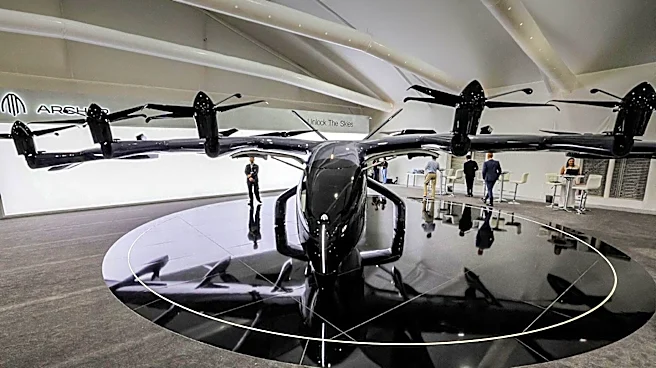
EHang Holdings Limited's pilotless human-carrying electric vertical take-off and landing (eVTOL) aircraft, the EH216-S, has successfully completed its inaugural public flight at Hong Kong Cyberport. This event marks a significant step in the HKSAR Government’s
Low-Altitude Economy 'Regulatory Sandbox X' Trial Project, which commenced validation flights in mid-August. The EH216-S performed vertical take-off and landing, low-altitude cruising, and hovering maneuvers along pre-programmed routes, demonstrating stable flight performance and autonomous control. This public demonstration is part of a series of flights scheduled from August 28 to 30 to further validate the system's reliability and safety under regular, high-frequency operational scenarios. EHang is collaborating with Kwoon Chung Smart Mobility Company Limited and Hong Kong Cyberport Management Company Limited to prepare for commercialization. The EH216-S is notable for being the world's first pilotless human-carrying eVTOL aircraft to receive Type, Production, and Standard Airworthiness Certificates from the Civil Aviation Administration of China (CAAC), and is already in commercial operation in China.
Why It's Important?
This public flight in Hong Kong is crucial for the global expansion of pilotless eVTOL operations and the development of advanced air mobility (AAM). By leveraging Hong Kong as a gateway, EHang aims to accelerate the commercial deployment of its technology internationally. The 'Regulatory Sandbox X' project provides a controlled testing environment to gather real-world operational data, which is essential for informing and refining future regulatory frameworks and operational standards for pilotless eVTOLs in Hong Kong and other markets. The successful demonstration of the EH216-S's capabilities under these conditions can build confidence among regulators and the public regarding the safety and efficiency of autonomous air mobility. This initiative supports Hong Kong's strategic goal of becoming a hub for innovative low-altitude applications in the Asia-Pacific region, aligning with the National 15th Five-Year Plan's emphasis on developing the low-altitude economy. The integration of such technologies promises to redefine urban and intercity transportation, offering eco-friendly and efficient alternatives for passenger and cargo movement.
What's Next?
Following the initial public flights, the 'Regulatory Sandbox X' project will continue with systematic validation flights to accumulate substantial real-world operational data and experience. These insights will be critical for the development and refinement of forward-looking regulatory frameworks and operational standards for pilotless eVTOL operations in Hong Kong and potentially other global markets. The HKSAR Government is also studying dedicated legislation for non-conventional aircraft, with drafting targeted for completion in 2027. EHang plans to continue its expansion across Asia and other global markets, steadily advancing the commercialization and deployment of pilotless human-carrying eVTOL operations, building on the sandbox model and its Global Fast Track Program. The company's VT35 model is also expected to contribute to a multi-tiered low-altitude mobility network for long-range and intercity scenarios, further shaping the future of air mobility.
Beyond the Headlines
The successful public flight of the EH216-S in Hong Kong signifies more than just a technological achievement; it represents a critical step in addressing the complex regulatory and societal challenges associated with integrating autonomous aerial vehicles into urban environments. The 'sandbox' approach adopted by Hong Kong provides a pragmatic model for other regions to test and validate emerging aviation technologies in a safe and controlled manner, generating the necessary data to build robust regulatory frameworks. This development could trigger a paradigm shift in urban planning and infrastructure, necessitating the creation of 'vertiports' and dedicated low-altitude air traffic management systems. Furthermore, the emphasis on pilotless operations raises profound questions about public acceptance, safety perceptions, and the future of human roles in aviation. The long-term implications include potential reductions in traffic congestion, lower carbon emissions from transportation, and the creation of new economic opportunities in advanced air mobility, while also requiring careful consideration of noise pollution and privacy concerns.