




What's Happening?
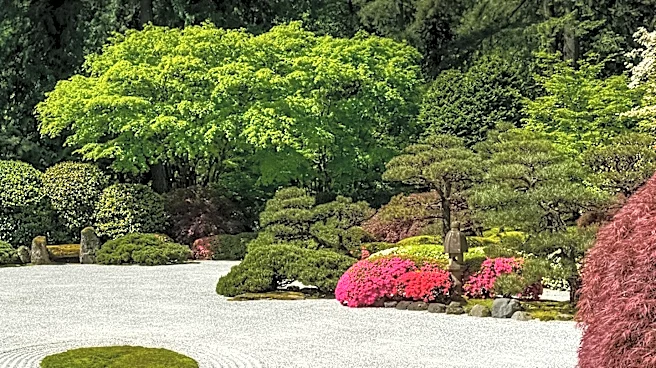
Gravel gardening is gaining traction as a sustainable and low-maintenance landscaping technique across the U.S. This method involves replacing traditional soil surfaces with a six-inch layer of gravel, allowing for the cultivation of deep-rooted, drought-tolerant
perennials. Initially met with skepticism by some horticulturists like Jeff Epping, who found early examples cold and uninspiring, the technique has proven its efficacy in reducing the need for irrigation, fertilizer, and mulch, while also suppressing weeds. Epping, now a proponent, highlights that while initial watering is necessary for plant establishment, the long-term water requirements are minimal. The gravel acts as a mulch, retaining soil moisture and preventing waterlogging, which can lead to root rot. This approach is particularly beneficial in arid regions but is also suitable for smaller yards where grass struggles to grow, offering both environmental and aesthetic advantages.
Why It's Important?
The adoption of gravel gardens is important for U.S. homeowners and the environment due to its significant contributions to water conservation and reduced landscape maintenance. In an era of increasing drought concerns and a growing emphasis on sustainable living, this method provides a practical solution for creating resilient landscapes. By minimizing the need for irrigation and chemical inputs, gravel gardens lessen the environmental footprint of residential and commercial properties. This approach also offers economic benefits by reducing water bills and the costs associated with fertilizers and herbicides. Furthermore, it promotes biodiversity by supporting drought-tolerant and native plant species, which can provide habitats for local wildlife. The versatility of gravel gardens, allowing them to complement various home styles from modern to rustic, makes them an accessible option for a broad range of property owners seeking both beauty and ecological responsibility.
What's Next?
The trend of gravel gardening is expected to continue expanding across the U.S., driven by increasing awareness of climate change impacts and the desire for more sustainable home practices. Educational initiatives, such as those led by experts like Jeff Epping through his book 'The Gravel Garden,' will likely further popularize the technique among beginners and experienced gardeners alike. We may see more landscape designers incorporating gravel gardens into their projects, particularly in areas prone to drought or with challenging soil conditions. The market for drought-tolerant plants and various types of gravels is also anticipated to grow, offering homeowners more options to customize their landscapes. Additionally, local municipalities and homeowner associations might begin to encourage or even incentivize the adoption of water-wise landscaping methods like gravel gardens, potentially leading to broader policy changes that support ecological landscaping practices.
Beyond the Headlines
Beyond the immediate benefits of water conservation and reduced maintenance, the rise of gravel gardening signifies a deeper cultural shift towards re-evaluating traditional lawn-centric landscapes in the U.S. This movement challenges the long-held aesthetic preference for manicured green lawns, which often require significant water, chemical, and labor inputs. The embrace of gravel gardens reflects a growing appreciation for naturalistic and ecologically functional landscapes that are in harmony with local climates and ecosystems. This shift could lead to a broader redefinition of what constitutes a beautiful and desirable yard, moving towards designs that prioritize sustainability, resilience, and biodiversity. It also highlights the role of individual homeowners in contributing to larger environmental goals, fostering a sense of stewardship for local ecosystems. The aesthetic flexibility of gravel gardens, allowing for diverse plant palettes and design styles, further supports this evolution, demonstrating that ecological responsibility does not necessitate a compromise on beauty or personal expression.