

What's Happening?
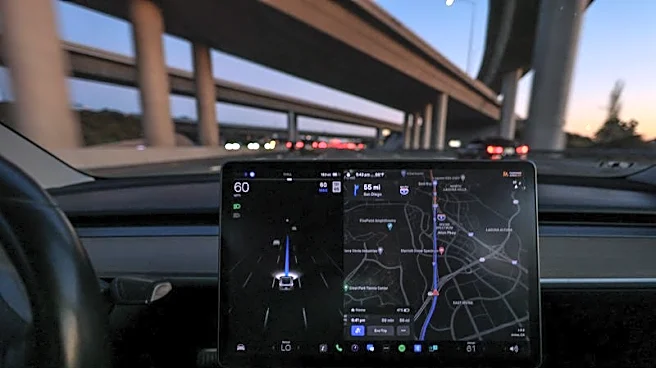
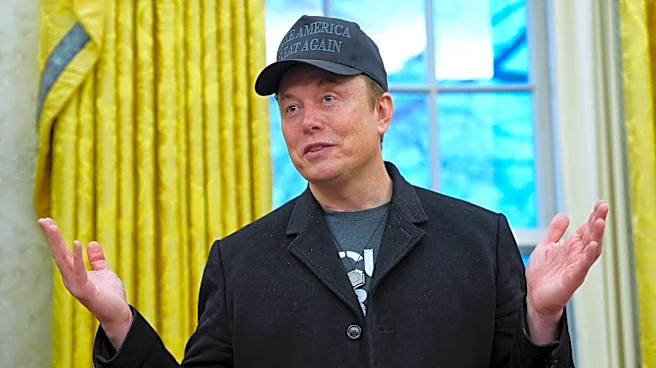
Tesla's Full Self-Driving (FSD) v15 is scheduled for a wide release in December, as announced by Elon Musk. This update follows a teaser from Tesla's AI team and Ashok Elluswamy, Tesla's vice president of AI software, who shared the Roman numeral 'XV'.
Musk described v15 as a "complete overhaul of the software architecture" during Tesla's April earnings call, indicating it will utilize a larger AI model and run on Tesla's AI4 hardware. While an initial target for AI4 compatibility was late 2026 or early 2027, the December release details regarding hardware eligibility were not specified. Elluswamy previously stated in July that Tesla's Robotaxi fleet was already operating with early versions of v15, and in October, he mentioned the update would incorporate Tesla's proprietary AI-based maps. The new system is expected to manage the beginning and end of trips, with further integration of navigation and parking functionalities later on. Currently, Tesla's 2026.44.1 update includes FSD v14.3.13, which still requires drivers to supervise and be prepared to take control.
Why It's Important?
The impending wide release of Tesla's FSD v15 represents a significant advancement in autonomous driving technology, potentially impacting the automotive industry and the future of transportation. A "complete overhaul of the software architecture" suggests a fundamental shift in how Tesla's vehicles perceive and interact with their environment, aiming for enhanced safety and reliability. The integration of Tesla's own AI-based maps could reduce reliance on third-party mapping services, offering greater control over data and potentially improving accuracy for FSD operations. This update could accelerate the development and adoption of autonomous vehicles, influencing regulatory frameworks and public perception of self-driving cars. For consumers, improved FSD capabilities could lead to more convenient and potentially safer driving experiences, while for Tesla, it could solidify its position as a leader in AI and automotive innovation. The expansion of Robotaxi services, already running early v15 versions, indicates a strategic move towards a future of automated ride-sharing, which could disrupt traditional taxi and ride-hailing markets.
What's Next?
The wide release of FSD v15 in December will be closely watched by the automotive industry, technology enthusiasts, and regulators. While Musk confirmed the December release, specific details regarding the exact date, geographical rollout, and compatible car models are yet to be announced. It remains to be seen if the update will be part of a broader holiday update, as suggested by Musk. The performance of v15 in real-world scenarios will be critical, especially concerning its ability to address existing FSD issues, such as avoiding HOV lanes when passengers are present or improving turn and merge timing. The transition to unsupervised driving was not announced with this update, indicating that drivers will still need to remain attentive. Future developments will likely focus on further refining the AI model, expanding the use of Tesla's AI-based maps, and gradually moving towards fully autonomous capabilities, which will require ongoing regulatory approvals and public acceptance.
Beyond the Headlines
The release of FSD v15 extends beyond mere software improvements, touching upon broader implications for artificial intelligence, ethical considerations in autonomous systems, and the future of urban planning. The shift to a larger AI model and AI4 hardware signifies Tesla's commitment to pushing the boundaries of AI in real-world applications, potentially setting new benchmarks for machine learning in complex environments. Ethical debates surrounding autonomous vehicle responsibility in accidents, data privacy with AI-based maps, and the impact on employment in transportation sectors will likely intensify as FSD capabilities advance. Furthermore, the success of FSD v15 could influence urban infrastructure development, potentially leading to redesigned roads and traffic management systems optimized for autonomous vehicles. The long-term societal impact of widespread autonomous driving, including changes in car ownership models and personal mobility, remains a significant area of consideration.