


What's Happening?
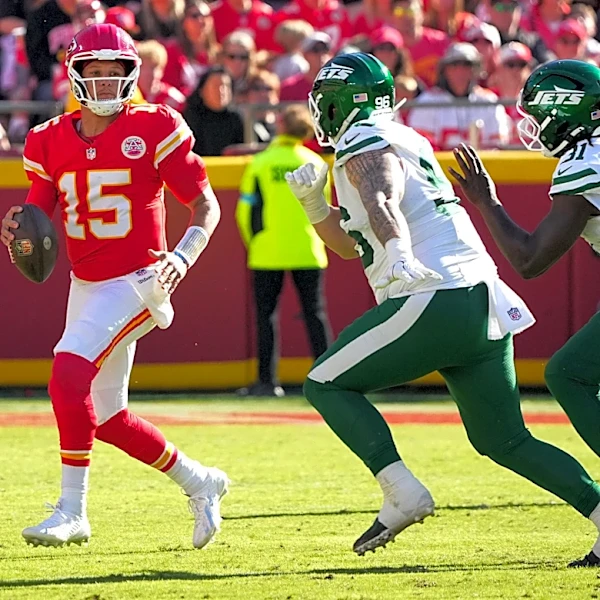
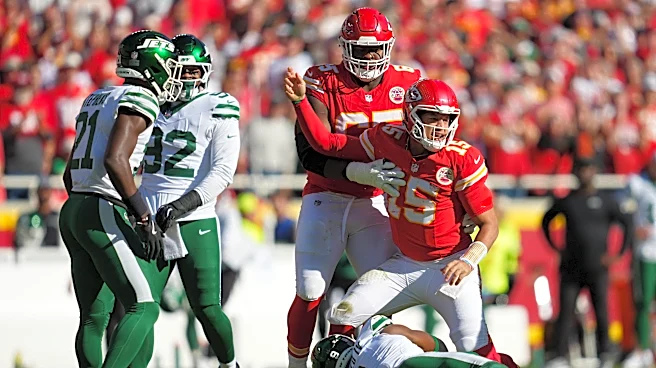
The Kansas City Chiefs' decision to utilize backup quarterback Justin Fields in a short-yardage situation during Sunday's game against the New York Jets backfired significantly. Fields was brought into the game on a 3rd and 1 at the Chiefs' 34-yard line
in the first quarter. His primary objective was to execute a quarterback sneak to gain a first down and maintain the drive, allowing Patrick Mahomes to return to the field. However, Fields not only failed to reach the first down marker but also fumbled the ball. This turnover resulted in the Jets gaining possession deep in Kansas City territory. This incident marked Fields' first significant play of the season, as he had only played one snap prior to this attempt. The Chiefs had acquired Fields in the offseason with intentions of using him in specific packages, particularly for short-yardage scenarios, a move fans had been anticipating.
Why It's Important?
This incident highlights the inherent risks and strategic complexities involved in NFL game management, particularly when deploying backup players in critical situations. For the Kansas City Chiefs, the failed play and subsequent turnover represent a lost opportunity to maintain offensive momentum and potentially score points. Giving the New York Jets favorable field position early in the game could significantly influence the game's outcome, potentially shifting momentum and increasing pressure on the Chiefs' defense. For Justin Fields, this high-profile misstep in his first significant action of the season could impact future coaching decisions regarding his role in specialized packages. It underscores the fine margins in professional football, where a single play can have immediate and cascading effects on team performance and strategic planning.
What's Next?
Following this play, the Kansas City Chiefs will likely re-evaluate their strategy for short-yardage situations and the deployment of backup quarterbacks. The coaching staff will need to assess whether the concept of using Justin Fields in such scenarios remains viable or if adjustments are necessary. For Fields, his performance in future practice sessions and any subsequent game opportunities will be crucial in rebuilding confidence and demonstrating his capability to execute under pressure. The team's overall offensive strategy might be scrutinized, especially concerning how they manage critical downs and utilize their full roster. This event could also spark discussions among fans and sports analysts about the effectiveness of such specialized packages and the readiness of backup players for high-stakes moments.
Beyond the Headlines
The incident with Justin Fields extends beyond a single play, touching upon broader themes of player development, strategic innovation, and risk assessment in professional sports. Teams often invest in backup quarterbacks not just for injury contingencies but also for specialized roles, aiming to exploit unique skill sets. However, this situation underscores that even well-intentioned strategic innovations carry inherent risks. The pressure on players, especially those in new roles or with limited playing time, is immense, and a single mistake can have disproportionate consequences. This event could also influence how other NFL teams approach similar strategic decisions, prompting a re-evaluation of the balance between innovative play-calling and minimizing turnover risks in critical game situations.