





What's Happening?
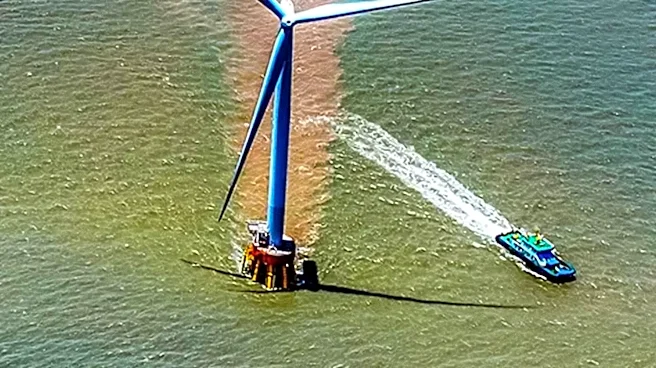
Iberdrola is significantly expanding its offshore wind energy operations, with current projects in the United Kingdom, Germany, France, and the United States totaling approximately 3,200 MW and representing an investment of around 13 billion euros. An
additional 2,700 MW are under construction in the UK and Germany, with an investment of nearly 10 billion euros. The company is also developing a new Electric Commissioning Service Operation Vessel (eCSOV) with over 24 MWh of battery storage capacity, designed to reduce emissions from offshore operations and electrify services for wind farm construction, commissioning, and maintenance. This vessel, currently under construction in Vigo, will feature electric propulsion and auxiliary methanol-powered engines, and will be capable of transporting thousands of tons. The eCSOV is touted as having the largest storage capacity of its kind globally for electric project commissioning operations.
Why It's Important?
This expansion by Iberdrola, particularly its involvement in U.S. offshore wind projects, signifies a major step in the global transition to renewable energy and has direct implications for the U.S. energy sector. The investment of billions of euros in offshore wind infrastructure contributes to job creation, technological advancement, and energy independence in the U.S. The development of the eCSOV highlights a commitment to reducing the carbon footprint of the offshore wind industry itself, setting a precedent for more sustainable practices in maritime transport and construction. This move could accelerate the adoption of similar electrified solutions by other companies operating in U.S. waters, fostering innovation and reducing operational emissions in the burgeoning U.S. offshore wind market. It also positions the U.S. as a key player in the global renewable energy landscape, attracting further foreign investment and expertise.
What's Next?
Iberdrola plans to add East Anglia 1 North, a 900 MW project, to its portfolio, which is ready for upcoming British auctions. The company's international portfolio also includes other developments in these markets and in countries like Australia. The increasing demand for specialized vessels for offshore wind farm construction and operation suggests that more such electrified vessels will be needed. This trend is expected to further electrify the marine transport sector, a critical component of the offshore wind value chain. The construction of the eCSOV also reinforces the role of specialized naval industries in supporting the energy transition. Future developments will likely focus on integrating more advanced battery technologies and alternative fuels like methanol to further decarbonize offshore operations, potentially influencing U.S. maritime and energy policies.
Beyond the Headlines
The electrification of offshore wind supply chains, exemplified by Iberdrola's new eCSOV, represents a deeper shift towards comprehensive decarbonization beyond just energy generation. It addresses the often-overlooked emissions associated with the construction and maintenance of renewable energy infrastructure. This initiative could spur a broader re-evaluation of environmental impact across various industrial sectors, pushing for greener logistics and operational practices. Ethically, it underscores a commitment to not only produce clean energy but also to do so in the most environmentally responsible manner possible. Culturally, it promotes the idea that sustainability must be embedded throughout the entire lifecycle of a project, from conception to operation, influencing public perception and corporate responsibility standards within the U.S. and globally.