

What's Happening?
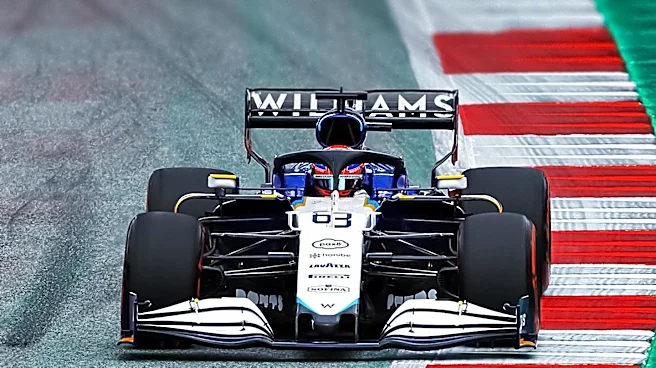
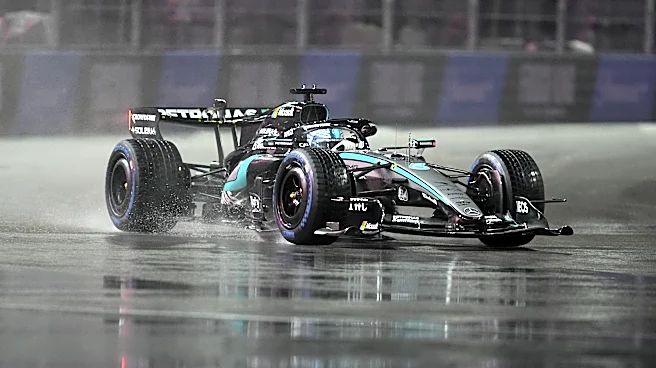
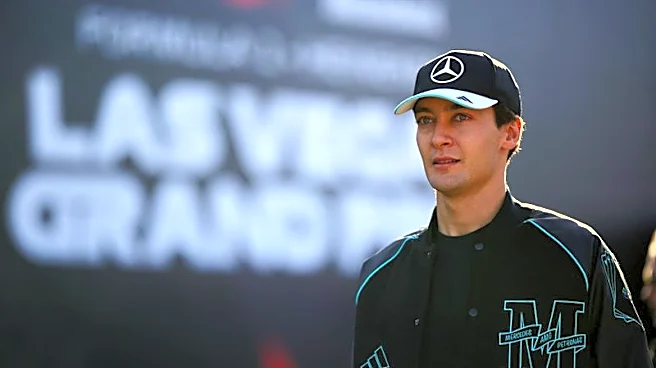
George Russell secured the fastest time in the second practice session (FP2) of the Las Vegas Grand Prix 2026, clocking a 1:47.272 on Intermediate tires. This placed him 0.071 seconds ahead of Pierre Gasly. The first practice session (FP1) saw no lap
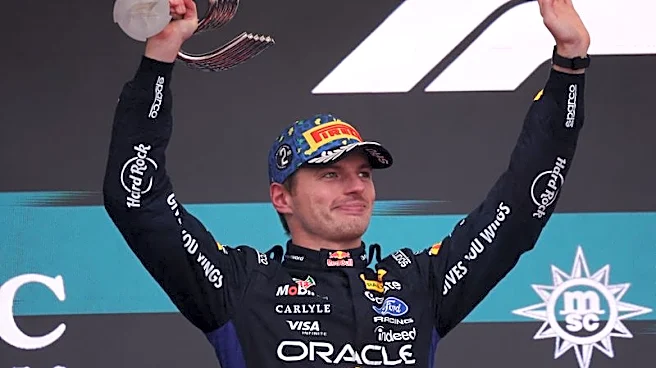
times recorded due to heavy rain and extremely low grip conditions, described by Max Verstappen as 'almost like an ice rink.' Throughout both sessions, no driver managed to run on slick tires, indicating the persistent wet track. Several drivers, including Oscar Piastri, Carlos Sainz, Lance Stroll, Kimi Antonelli, and Oliver Bearman, have incurred grid penalties for exceeding their power unit component allocations, with Bearman facing a substantial 35-place grid drop. Max Verstappen experienced power interruptions during FP2, completing only nine laps and finishing 13th. The challenging conditions also led to numerous lap deletions for track limits and a red flag in FP2 due to debris on the track.
Why It's Important?
The challenging wet conditions at the Las Vegas Grand Prix 2026 practice sessions significantly impact team strategies and driver performance. The inability to run on slick tires means teams have limited data on how their cars will perform in dry conditions, which could lead to unpredictable race outcomes. The numerous grid penalties for key drivers, particularly Piastri and Sainz, will reshuffle the starting grid and force teams to adapt their race strategies to mitigate the impact of these penalties. Verstappen's power issues are a concern for Red Bull, especially as he is in a tight battle for second place in the championship. The lack of dry running also means that the effectiveness of new car parts, such as McLaren's new floor and Mercedes' new ADUO-enabled turbo, remains largely untested in race-representative conditions, potentially affecting their competitive advantage.
What's Next?
The teams will proceed to FP3 and qualifying, with forecasts indicating a possibility of more rain, particularly for FP3. This continued wet weather could further limit dry running and complicate setup decisions for the race. Teams will be working to resolve any technical issues, such as Verstappen's power interruptions, and to gather as much data as possible on the intermediate tires. The grid penalties will be applied for qualifying, setting the starting positions for the race. Drivers will need to quickly adapt to any changes in track conditions, and strategic decisions regarding tire choices and pit stops will be crucial given the limited dry weather data. The performance in qualifying will be particularly critical for drivers with grid penalties, as they will aim to minimize the impact of their starting position disadvantages.
Beyond the Headlines
The extreme weather conditions and the resulting lack of dry running highlight the inherent challenges of street circuits, especially when combined with adverse weather. This situation could lead to a highly unpredictable race, potentially favoring drivers who excel in wet conditions or those who can adapt quickly to changing circumstances. The significant number of power unit penalties early in the weekend also raises questions about engine reliability and the stringent regulations governing component usage in Formula 1. Such penalties can dramatically alter championship battles and team standings, adding an extra layer of strategic complexity. The event also underscores the importance of driver skill and car setup in managing low-grip conditions, which can often level the playing field between top teams and midfield contenders, potentially leading to unexpected podium finishes or upsets.