






What's Happening?
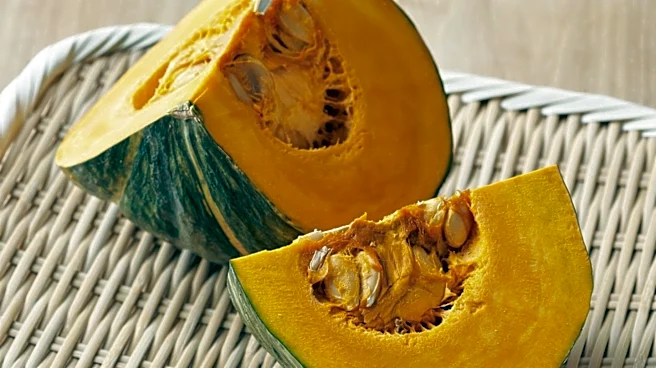
Sunshine Kabocha squash, a hybrid variety developed by Rob Johnston of Johnny's Selected Seeds, is gaining recognition for its exceptionally sweet and nutty flavor. This small to medium-sized squash, typically weighing between 0.5 to 3.6 kilograms, features
a thin, dark orange rind with faint yellow to tan stripes and a coarse, slightly bumpy texture. Its thick, dense, and string-less flesh is a vibrant yellow to orange hue. The squash is known for its high sugar content, testing as high as 15 on the Brix scale, making it one of the sweetest varieties available. It is botanically classified as Cucurbita maxima and is available from fall to winter. The development of Sunshine Kabocha squash involved two decades of hand-pollinated crossing, starting in the 1970s with a cross between Red Kuri and Golden Nugget, and later in the 1980s with a green Kabocha known as Home Delight. It was officially released to the market in 2004.
Why It's Important?
The increasing popularity of Sunshine Kabocha squash in the U.S. market signifies a growing consumer interest in diverse and flavorful produce options. Its high sugar content and versatile culinary applications, suitable for both sweet and savory dishes, make it an attractive ingredient for home cooks and professional chefs alike. The squash is a good source of vitamins A and C, which support vision, immunity, and skin health. It also contains calcium and potassium for bone and teeth health, and beta-carotene, lutein, and zeaxanthin, which may improve vision and protect against eye-related ailments. This nutritional profile, combined with its appealing taste, positions Sunshine Kabocha squash as a valuable addition to a healthy diet. Its availability in farmers' markets and specialty grocers across the United States indicates a positive trend for agricultural diversity and consumer choice.
What's Next?
As consumer awareness and demand for unique and nutritious produce continue to grow, Sunshine Kabocha squash is likely to see increased cultivation and distribution within the United States. Its adaptability for smaller gardens and farms, due to its compact vine growth, could encourage more local production and availability. The squash's versatility in cooking, from roasting and steaming to use in purees, fillings, and desserts, suggests it could become a staple in seasonal menus. Further culinary exploration and recipe development featuring Sunshine Kabocha squash could also contribute to its broader adoption. The ongoing interest in specialty produce varieties indicates a potential for continued growth in the market for unique and flavorful squashes like the Sunshine Kabocha.
Beyond the Headlines
The success of Sunshine Kabocha squash highlights a broader trend in the agricultural sector towards developing hybrid varieties that offer enhanced flavor, nutritional benefits, and cultivation efficiency. This focus on innovation by breeders like Rob Johnston contributes to food security and consumer satisfaction by providing a wider array of high-quality produce. The squash's cultural significance in Japan, where Kabocha is a general term for squash and is used in traditional dishes believed to ward off evil spirits, underscores the deep connection between food, culture, and tradition. While the U.S. context may not share the same cultural beliefs, the appreciation for its unique qualities reflects a global convergence in valuing diverse and flavorful ingredients. This trend also points to the importance of specialty grocers and farmers' markets in introducing and popularizing less common produce varieties to a wider audience.