






What's Happening?
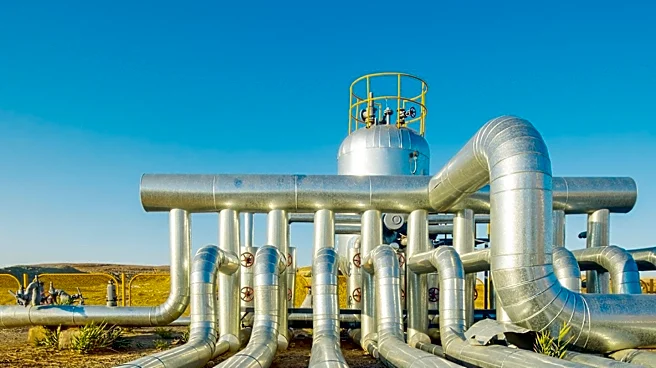
Kuwait Petroleum Company (KPC) has entered into a $16 billion leasing agreement with a consortium of investment firms, including Blackstone Group, Brookfield Asset Management, and KKR, for its crude oil pipelines. This deal involves the formation of a joint
venture with KPC's subsidiary, Kuwait Oil Company (KOC), which will lease the use rights to 13 pipelines. KOC will maintain a 51% majority stake in the joint venture, ensuring exclusive operational and maintenance rights over a 20.5-year period. The agreement is designed to generate $7.85 billion in upfront proceeds for KOC, which will be used for capital expenditures aimed at achieving a crude oil production target of four million barrels per day by 2035. This move comes amid regional tensions, including recent Iranian strikes on Kuwaiti infrastructure.
Why It's Important?
The agreement is significant as it underscores Kuwait's strategic efforts to diversify its capital sources and strengthen its energy sector amidst regional instability. By securing substantial investment from major global firms like Blackstone and KKR, Kuwait is positioning itself as a resilient and attractive destination for international capital. This deal not only supports Kuwait's ambitious production goals but also highlights the confidence of international investors in the country's long-term energy strategy. The involvement of prominent investment firms reflects a broader trend of increased foreign investment in the Middle East's energy sector, which could lead to enhanced economic stability and growth in the region.
What's Next?
The joint venture is expected to proceed with the operational management of the pipelines, with KOC focusing on meeting its production targets. The success of this venture could pave the way for further international investments in Kuwait's energy infrastructure. Additionally, the deal may prompt other Gulf nations to seek similar partnerships to bolster their energy sectors. Stakeholders will likely monitor the geopolitical situation closely, as regional tensions could impact the stability and security of energy infrastructure investments.