




What's Happening?
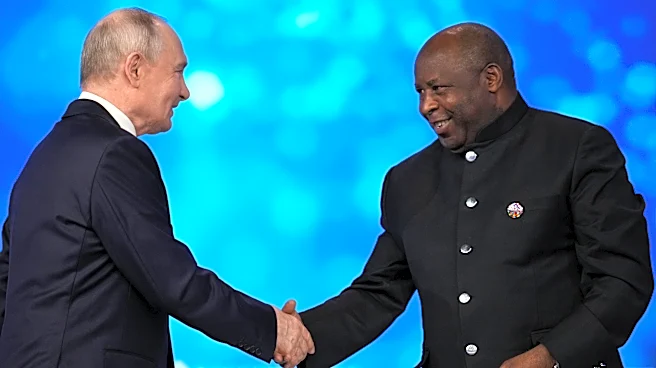
Russian State-owned company Rosgeologiya, through its unit Zarubezhgeologia, has signed agreements with Mali's Ministry of Mines to develop a digital geological map and an information system for managing the country's mining sector. These agreements were
finalized during the Russia-Africa forum in Moscow. The project involves creating a medium-scale geological map for over half of Mali's territory, identifying areas with potential for future mineral exploration. Additionally, an information system will be established to manage geological data, mineral licensing, and regulatory oversight of mining activities. Alexey Desyatkin, head of Zarubezhgeologia, stated that this initiative aims to enhance the accessibility and transparency of Mali's mineral resource information for potential investors. Mali is a significant gold producer and is looking to expand its development of other mineral resources, such as lithium. This collaboration signifies a further deepening of economic ties between Mali and Russia, as Mali's military rulers have increasingly turned away from traditional Western partners since the 2020 coup, fostering broader cooperation in security, mining, and energy.
Why It's Important?
This agreement is significant as it solidifies Russia's growing influence in the Sahel region, particularly in Mali, which has been shifting its geopolitical alliances. For Mali, the development of a comprehensive geological map and a modern mining data system could enhance its capacity to attract foreign investment beyond traditional partners and more efficiently manage its valuable mineral resources. Improved data accessibility and transparency, as highlighted by Zarubezhgeologia, are crucial for effective resource governance and could potentially lead to increased revenue from the mining sector. For Russia, this move expands its economic footprint and strategic partnerships in Africa, leveraging its state-owned enterprises to gain access to critical mineral-rich nations. This engagement also reflects a broader trend of military-led nations in the Sahel, such as Burkina Faso and Niger, aligning more closely with Russia, which could reshape regional power dynamics and resource control. The shift away from Western partners by Mali could have long-term implications for global supply chains of minerals like gold and lithium.
What's Next?
Following the signing of these agreements, the next steps will involve the implementation phase of the projects. Rosgeologiya's Zarubezhgeologia unit will commence work on creating the geological map and developing the mining information system. This will likely entail deploying technical teams and resources to Mali to conduct geological surveys and establish the necessary digital infrastructure. Mali's Ministry of Mines will need to collaborate closely with the Russian firm to facilitate data collection, integration, and regulatory frameworks. The success of these projects could pave the way for further Russian investment and involvement in Mali's mining sector, potentially leading to exploration and extraction contracts. Other Sahel nations observing Mali's deepening ties with Russia may also consider similar partnerships, further altering the geopolitical landscape of resource development in Africa. The international community, particularly Western nations, will likely monitor these developments closely for their implications on regional stability and global resource markets.
Beyond the Headlines
Beyond the immediate economic and geopolitical implications, this partnership raises questions about the long-term sustainability and governance standards within Mali's mining sector. While increased transparency is a stated goal, the nature of state-to-state agreements, particularly with non-Western partners, can sometimes lead to less stringent oversight compared to international best practices promoted by Western institutions. There could be ethical considerations regarding labor practices, environmental impact, and revenue distribution, which may not be as rigorously scrutinized under these new arrangements. Furthermore, the deepening of security and economic ties with Russia by Mali and its neighbors could lead to a more entrenched Russian presence in the region, potentially challenging existing international norms and influence. This shift could also impact the competitive landscape for Western mining companies and investors who might find it more challenging to operate in a region increasingly aligned with Russia, leading to a re-evaluation of investment strategies in African mining. The long-term implications for Mali's economic sovereignty and its ability to independently manage its resources will be a critical aspect to watch.